Most blogs publish links and hope for the best. Readers skim past them, affiliate clicks stay flat and sessions end after a single page. Content link building strategies change that outcome by turning every link into a deliberate path that holds attention, earns the click and converts.
If you are a content manager or marketer who keeps hearing that you need a link building strategy but have never been handed a build-it-from-scratch plan, this guide is for you.
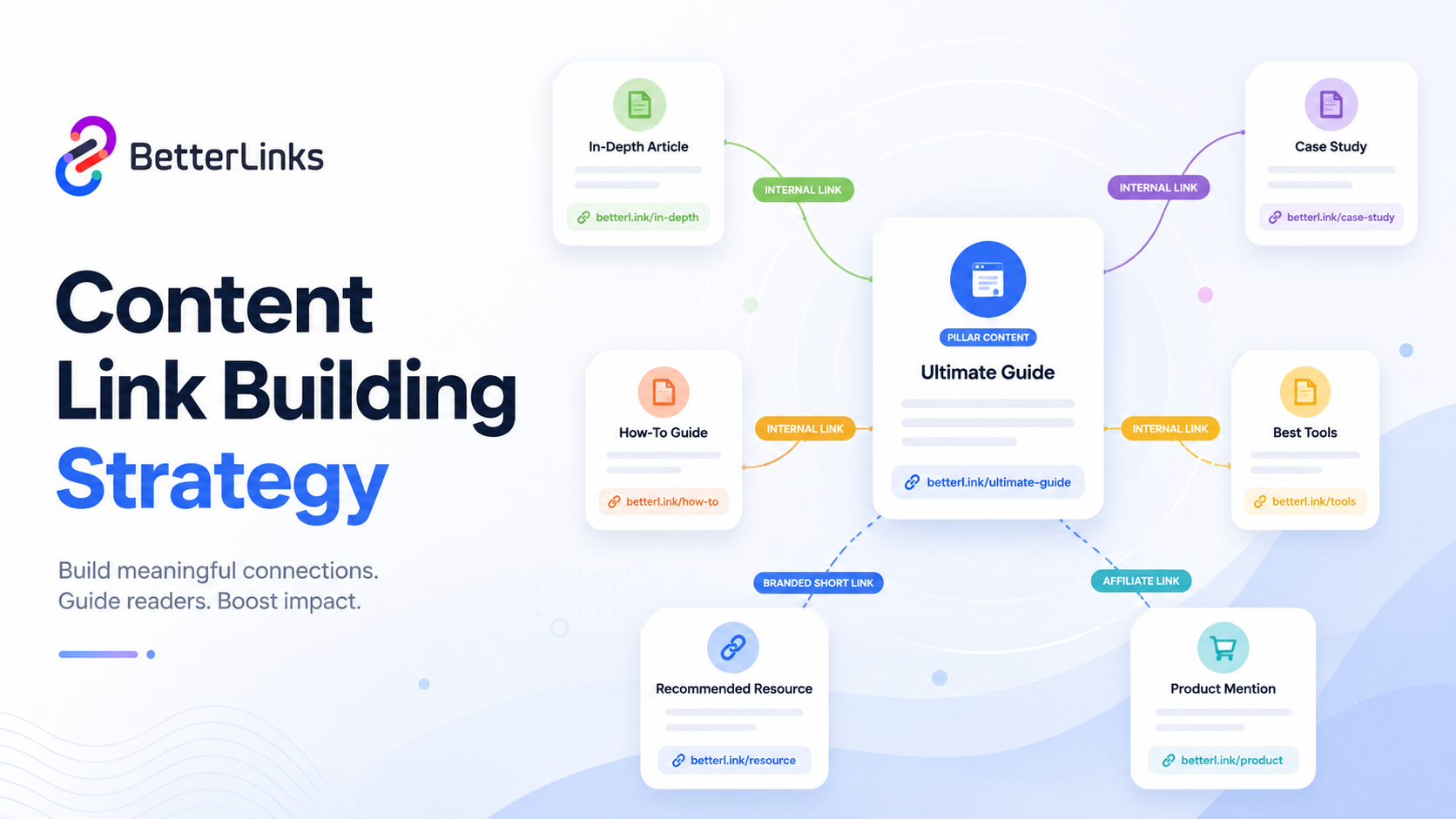
This article covers the full system end to end, what content link building strategies are and why they matter, how to plan internal links with a pillar-cluster model, how to write anchor text and calls to action that get clicked, how to use branded short links and clean affiliate links, and how to track and optimize everything afterward.
TL;DR
| Content link building strategies are the deliberate ways you place, structure and track links to keep readers engaged and moving through your site. Every link creates a path and without a strategy those paths often lead nowhere. The highest-impact moves are a pillar-cluster internal linking model, descriptive anchor text, inline calls to action, branded short links for campaigns and affiliates and consistent tracking. A plugin like BetterLinks helps you manage shortening, cloaking, UTM tagging, and analytics from one WordPress dashboard so the whole strategy lives in one place. |
Key Takeaways
- Links work best as a planned system, not scattered afterthoughts.
- Internal links in a pillar-cluster model raise dwell time and topical authority.
- Descriptive anchor text and inline placement earn far more clicks.
- Branded short links and clean affiliate links improve trust and click-through.
- Tracking with analytics and UTM data tells you which links actually move engagement.
What Are Content Link Building Strategies
Content link strategies are the deliberate decisions you make about which links appear in your content, where they sit, how their anchor text reads and how you measure their performance.
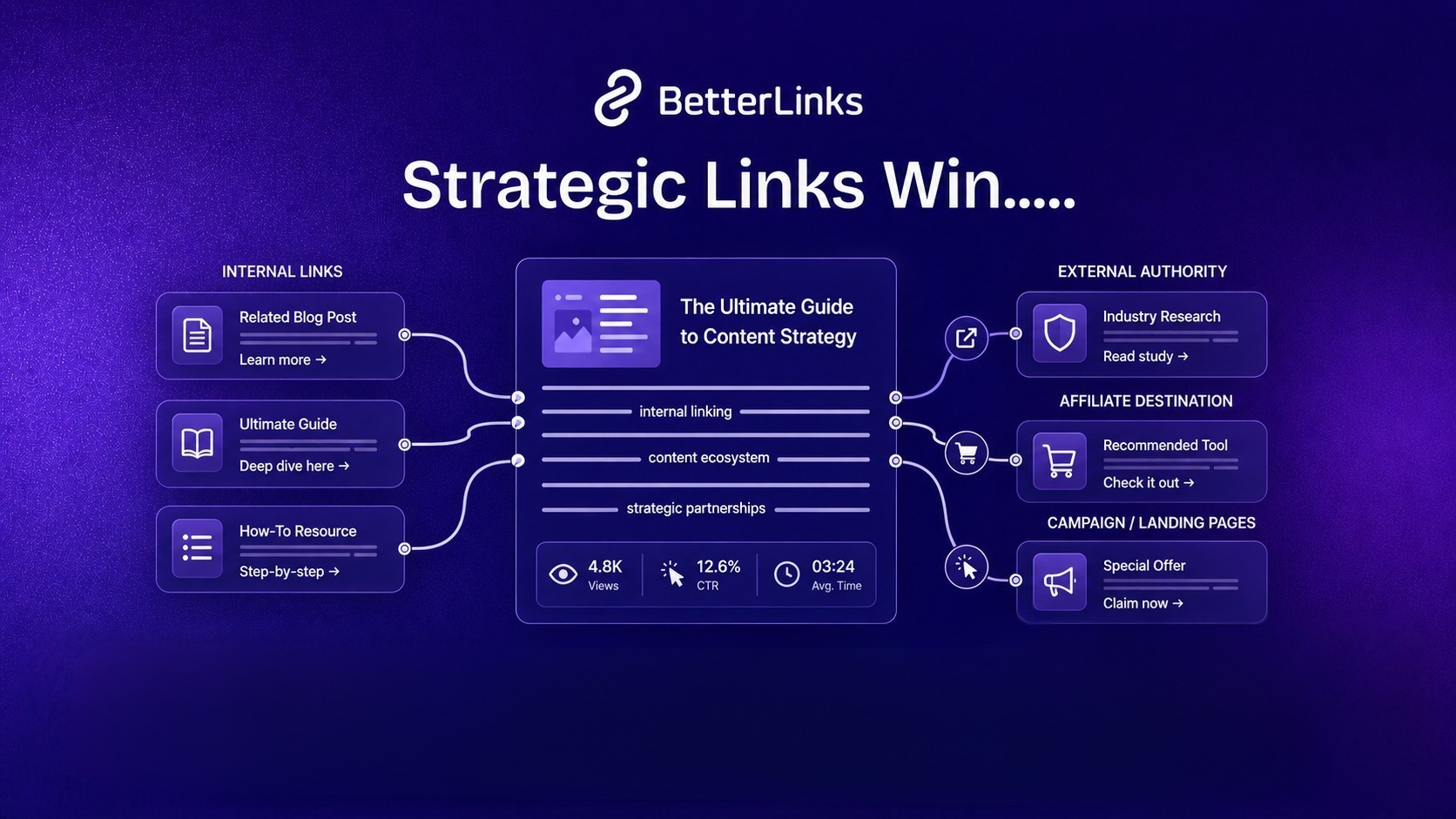
They cover internal links between your own pages, external links to sources, affiliate links that earn revenue and campaign links you share off-site. The goal is a connected experience that guides a reader from one useful destination to the next.
Links matter because they shape behavior. A well-placed internal link extends a session and signals to search engines which pages are important. Zyppy’s analysis of 23 million internal links found that pages with at least one exact-match anchor saw roughly five times more traffic than pages without one, which shows how much a single deliberate link can influence visibility.
Why Links Drive Engagement
Every link is an invitation. When the invitation is relevant and well-timed, the reader accepts it and stays longer. In Backlinko’s internal linking tests, placing links near the top of a page reduced bounce rate and improved dwell time, because readers were given something relevant to click before scrolling fatigue set in.
Longer dwell time feeds the engagement signals that search engines now weigh heavily. The effect is cumulative across a visit: a reader who follows two or three relevant internal links has effectively told the algorithm that your content answered the question, which lifts the perceived quality of the whole page.
Benefits
A coherent link strategy increases pages per session, strengthens topical authority, raises affiliate and campaign click-through and gives you clean data to optimize. These benefits compound, because each engaged session improves the signals that drive future visibility.
Mistakes to Avoid
The common error is treating links as decoration, dropping a generic ‘click here’ wherever it fits and never checking performance. That approach wastes the attention you worked to earn. A real example: a recipe blogger linked every post to the same homepage with the anchor ‘home’ and saw almost no internal clicks until the links became specific and contextual.
Best Practices
- Plan links around the reader’s next logical step, not around your navigation.
- Use specific, descriptive anchor text that previews the destination.
- Track every link so you can keep what works and cut what does not.
Build Strategic Internal Linking Systems, Not Random Connections
Internal linking is the practice of connecting your own pages so readers and search engines can move between them. It is the single largest on-page lever most sites underuse. An estimated 25% of web pages receive zero internal links, which means a quarter of the web is effectively invisible to both crawlers and readers.
It works by distributing authority and guiding attention. When a high-value page links to a related one, it passes context and equity, and it gives the reader a reason to continue.
John Mueller of Google has explained that a top-down pyramid structure helps Google understand the context of individual pages within a site.
The Pillar-Cluster Model
The dominant architecture in 2026 is the pillar-cluster model. A broad pillar page covers a topic in full, while focused cluster pages each handle a subtopic and link back up to the pillar that links down to each one. This bidirectional pattern concentrates topical authority and keeps your priority pages within three clicks of the homepage. Pages buried four or more clicks deep get crawled less and look less important.
Where to Place Internal Links
Placement decides whether a link earns a click. Position your most important internal links early, inside the first few paragraphs where attention is highest. Add contextual links within the body where they answer a question the reader just formed. Close with a small set of next-step links that extend the journey. Keep the count reasonable so each link stays meaningful.
Example
A WordPress affiliate site grouped twelve scattered posts into one pillar guide on email marketing with eleven supporting cluster articles, all cross-linked with descriptive anchors. Within two months, average pages per session rose noticeably and the pillar page started ranking for competitive terms it never reached as an isolated post.
Best Practices
- Build pillar pages first, then link clusters up and down.
- Keep critical pages within three clicks of the homepage.
- Audit regularly for orphan pages with zero internal links.
- Vary anchor text naturally while keeping it descriptive.
Mistake to Avoid
Letting pages go orphaned is the quiet killer of engagement. A link management tool helps you spot and fix gaps fast, and the BetterLinks link management guide walks through organizing links so none get stranded.
Optimize Anchor Text for Human Readers First
Anchor text is the visible, clickable words of a link. Contextual links are anchors placed naturally inside relevant content. Together they tell the reader and the search engine what to expect on the other side, which makes them central to any content link strategy.
Anchor text works as a promise. When the words match the destination, trust builds and the click follows. When they are vague, the reader hesitates. The fastest way to see the difference is to compare weak and strong anchors side by side.
| Generic anchor (weak) | Descriptive anchor (strong) | Why the strong version wins |
|---|---|---|
| “click here” | “how to set up UTM tracking” | Previews the exact payoff, so the reader knows the value before clicking. |
| “read more” | “the pillar-cluster model explained” | Matches the searcher’s language and signals topic relevance to crawlers. |
| “learn more” | “compare branded vs generic links” | Sets a clear expectation, which lifts click-through and reduces bounce-backs. |
Anchor Text Rules That Work
- Describe the destination in three to six words so the reader knows the value.
- Match the anchor to the searcher’s language, not internal jargon.
- Place anchors where the reader’s curiosity peaks, mid-sentence in relevant copy.
- Vary phrasing across a page so no single anchor feels repetitive.
Mistakes to Avoid
Generic anchors like ‘click here’ and ‘read more’ waste the strongest part of a link. Over-optimized, identical anchors on every link look manipulative and can dilute clarity. A practical fix is to read each anchor on its own and ask whether it tells the reader exactly where they are going.
Example
A SaaS blog replaced forty-plus ‘learn more’ anchors with descriptive phrases such as ‘how to set up UTM tracking,’ and internal click-through on those links climbed sharply because readers finally understood the payoff before clicking.
Strategically Place Calls to Action & Convert Readers into Customers
A call to action is a link or button that asks the reader to take a specific next step. It is the moment a content link strategy converts attention into action, so it deserves the same care as any other link decision.
CTAs work because they remove ambiguity. A clear next step lowers the effort of deciding, and the data backs this up. HubSpot’s analysis of more than 330,000 CTAs found that personalized CTAs convert 202% better than generic ones and reducing a page to a single clear CTA can lift conversions by up to 266%.
Placement Backed by Data
Where a CTA sits changes how often it gets clicked. Inline CTAs inside the content generate around 121% higher click-through than sidebar CTAs because they appear while the reader is engaged. Above-the-fold and end-of-content placements both earn attention when matched to reader intent. The principle is to put the action where the reader is already looking.
| CTA placement | Relative performance | Best use |
|---|---|---|
| Inline (within the content) | ~121% higher click-through than sidebar CTAs | The primary action, placed where engagement peaks. |
| Above the fold | Strong when matched to high intent | Returning or high-intent visitors who already know what they want. |
| End of content | Strong for completed-read intent | A natural next step after the reader finishes the piece. |
| Sidebar | Lowest of the four | Secondary or supporting offers only, never the main task. |
Wording That Earns Clicks
Action-oriented, first-person wording outperforms passive phrasing. In one Unbounce experiment, switching from second-person to first-person CTA wording increased clicks, showing that small copy changes can influence conversion behavior. Lead with a verb, name the value and keep it short. ‘Get my free link audit’ beats ‘Submit’ every time.
Example
A digital publisher cut three competing CTAs down to one inline, first-person button per article and watched newsletter signups rise because readers no longer had to choose between competing tasks.
Best Practices
- Use one primary CTA per page so the choice stays simple.
- Place the main CTA inline where engagement peaks.
- Write in first person with a clear value verb.
- Track CTA clicks so you can test and improve wording.
Use Branded Short Links to Build Trust & Improve Click Tracking
Branded short links are shortened URLs that carry your own domain and a readable slug. Affiliate link strategy is how you structure, cloak, and manage the revenue links inside your content. Both shape whether a reader trusts a link enough to click it.
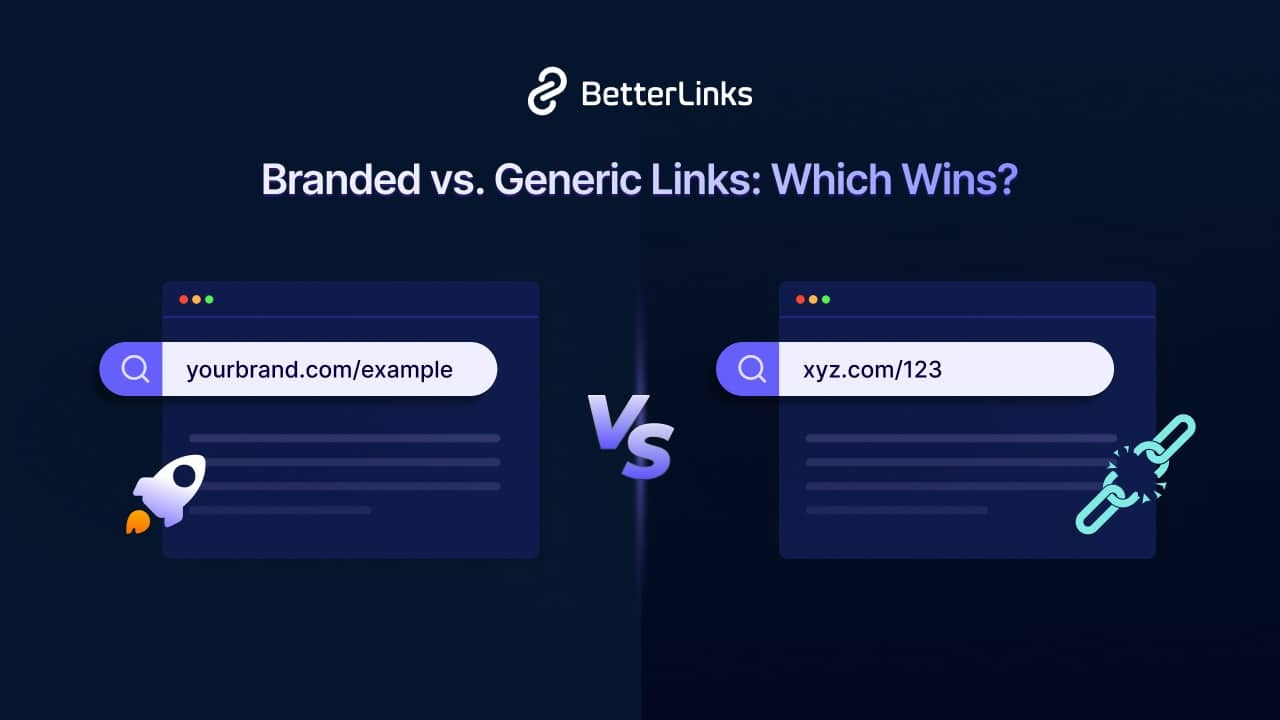
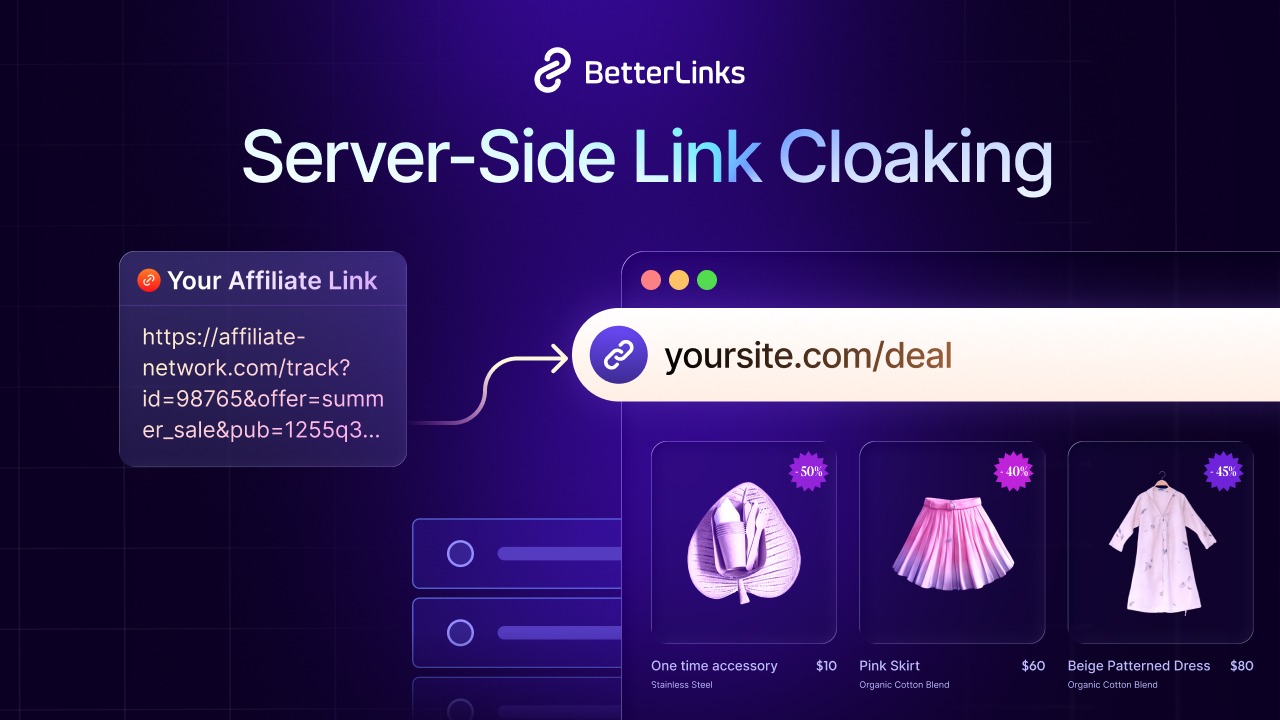
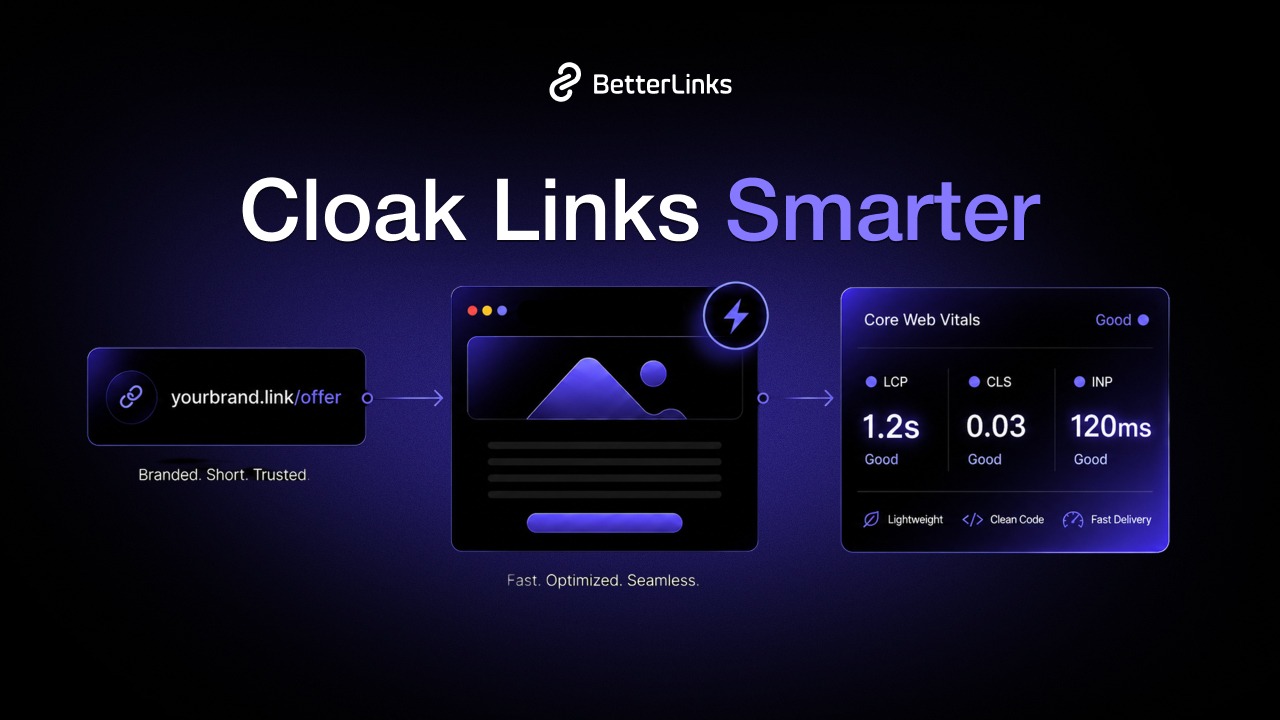
Branded short links work because they look trustworthy and predictable. A clean link such as yoursite.com/best-tools reads as safe, while a long string of random characters reads as risky. For affiliates, clean cloaked links are easier to share, update, and track, which protects both trust and revenue. This is exactly the kind of work a WordPress link manager like BetterLinks is built to handle, turning every shared URL into a short, on-brand, trackable link from one dashboard.
Why Branded Links Lift Engagement
Short, branded links are easier to read, remember, and share across social posts, emails, and QR codes. They reinforce your brand on every click and remove the visual clutter that makes readers hesitate. For campaigns, a consistent branded slug also makes performance easy to recognize at a glance.
| Link type | How it reads to a visitor | Engagement impact |
|---|---|---|
| yoursite.com/best-tools | Clean, on-brand, predictable | Higher trust and click-through; reinforces the brand on every click. |
| bit.ly/3xY9qLp | Neutral but generic | Acceptable, but adds no brand value and can look like spam in DMs. |
| network.com/aff?id=92&p=44a8… | Long, random, risky | Lowest trust; harder to share and impossible to remember. |
Affiliate Link Cloaking Best Practices: Do It Right
Link cloaking turns a long, ugly affiliate URL into a tidy branded redirect. It improves click-through and lets you update a destination once and skip editing hundreds of posts. Done responsibly, it pairs with a clear affiliate disclosure. A WordPress plugin like BetterLinks handles cloaking, redirects, and disclosures from one dashboard, with one-click migration from other plugins.
Example
An affiliate marketer replaced raw network URLs with branded cloaked links across a product roundup. When the merchant changed its affiliate program, a single redirect update fixed every post at once, and the cleaner links saw higher click-through than the original strings.
Branded & Affiliate Link Best Practices
- Use your own domain and readable slugs for every shared link.
- Cloak affiliate links and keep a visible disclosure.
- Centralize links so one update propagates everywhere.
- Add UTM parameters to campaign links for clean attribution.
Track Every Link to Understand What Works & Optimize for Link Performance
Link tracking is the practice of measuring how your links perform so you can improve them. A strategy without measurement is guesswork and guesswork wastes the engagement you worked to build.
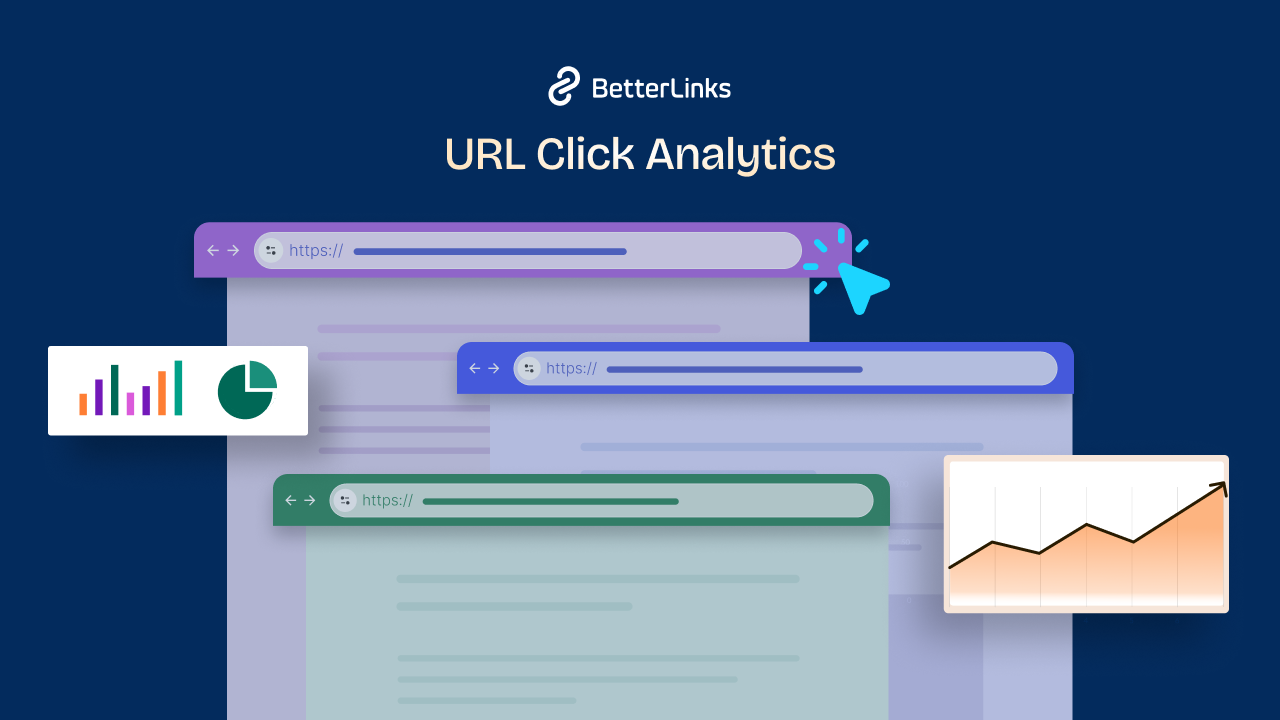
Tracking works by tying each click to data you can act on. When you know which links earn clicks, which pages send the most engaged readers and which CTAs convert, you can double down on winners and retire the rest.
WordStream data shows average site conversion sits around 2.4% while top performers reach 11.5% or more and the gap is usually a matter of disciplined optimization.
Metrics That Matter
- Total and unique clicks per link, to see real demand.
- Click-through rate by placement, to refine where links go.
- Pages per session and dwell time, to gauge engagement depth.
- Conversions from CTA links, to connect clicks to outcomes.
Track Outbound Clicks, Not Just Internal Ones
Internal clicks tell you how readers move through your site but outbound clicks to affiliate offers, partner sites, and campaign destinations are where revenue is usually decided. Default analytics often miss these because the visitor leaves your domain at the moment of the click.
Routing outbound and affiliate links through a managed redirect captures every one of those clicks before the handoff, so you can see which roundup, which placement, and which anchor actually drives revenue. BetterLinks records outbound and affiliate clicks automatically because every cloaked link is a redirect you own.
Use UTM Parameters for Campaigns
UTM parameters tag a link with campaign, source and medium so analytics can attribute results precisely. Building them by hand is error-prone, so a UTM builder saves time and keeps data clean. BetterLinks includes a built-in UTM builder and real-time analytics so you can monitor campaigns without leaving WordPress.
Split Test Your Links And Redirects
Dynamic redirects let you send one link to different destinations and compare results, which turns link placement into a testable experiment. Small tests on anchor text, CTA wording and destination pages compound into meaningful engagement gains over time.
The discipline matters more than any single test. A blog that reviews its link data every month spots a fading CTA or a broken affiliate redirect long before it drains revenue, and it learns which topics readers want to explore next. Over a quarter, those small corrections add up to a noticeably deeper, more engaged audience.
Best Practices
- Review link analytics on a regular schedule, not just at launch.
- Tag every campaign link with consistent UTM conventions.
- Test one variable at a time so results stay clear.
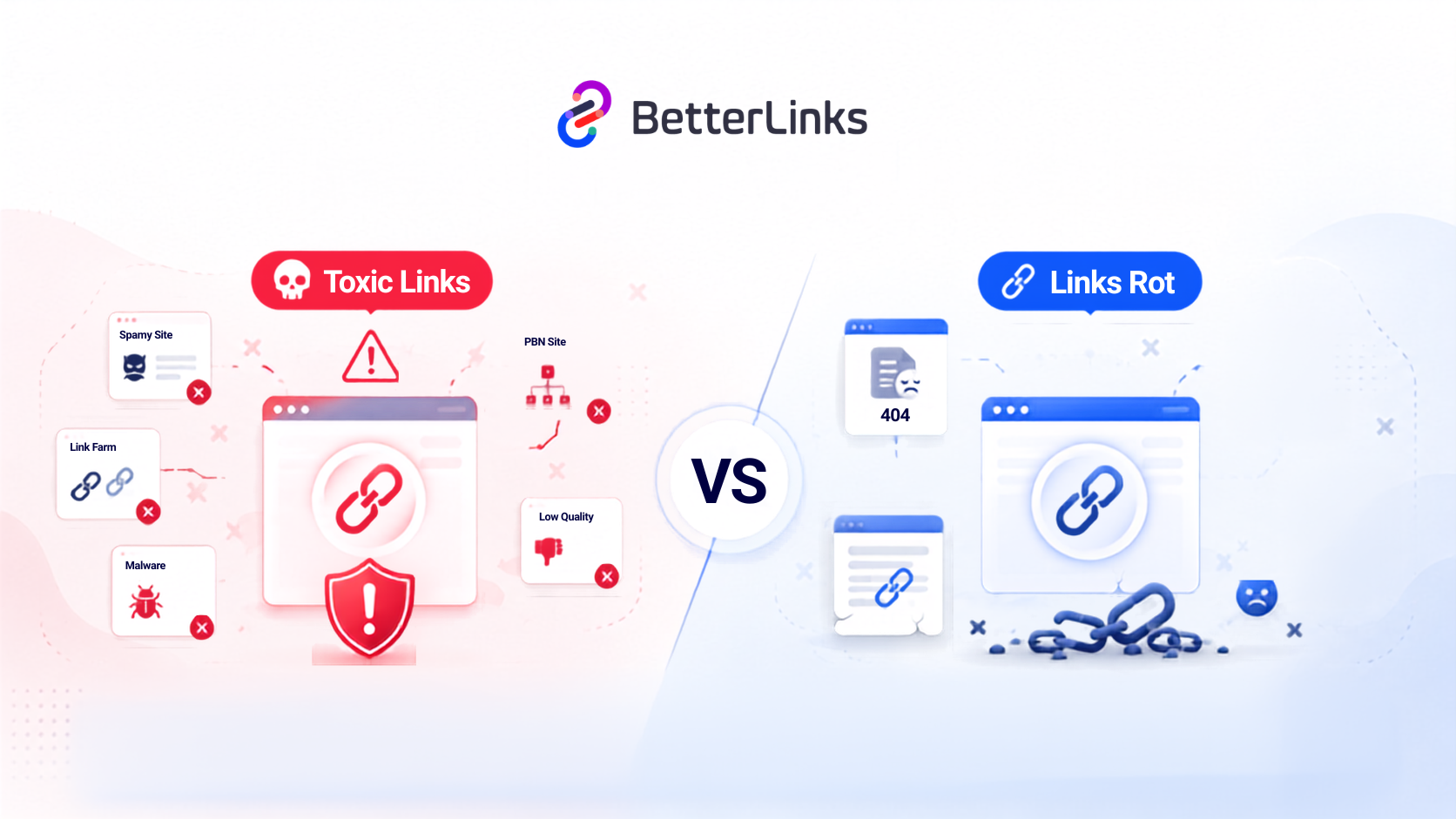
- Fix or remove broken links the moment they appear.
How BetterLinks Helps You Manage Your Entire Content Link Building Strategy
Every strategy above shares one practical challenge: links live everywhere across posts, campaigns, affiliate programs, and analytics tools and managing them by hand does not scale. BetterLinks brings the whole workflow into a single WordPress dashboard so the strategy you have just read about is something you can actually run, not just admire.
| What you want to do | How BetterLinks handles it |
|---|---|
| Shorten and brand links | Create short, on-brand slugs on your own domain for every shared link. |
| Cloak affiliate links | Turn long affiliate URLs into tidy branded redirects with built-in disclosure support. |
| Manage links centrally | Update one redirect and it propagates everywhere, so a changed program never breaks old posts. |
| Track UTM campaigns | Build UTM parameters with a guided builder and keep attribution data consistent. |
| Measure performance | See total and unique clicks, click-through, and real-time analytics without leaving WordPress. |
| Split test redirects | Send a single link to multiple destinations and compare which converts better. |
Link Building Myths vs. Reality
Many marketers still fall for outdated link building myths that can hurt engagement and rankings. A few persistent myths hold marketers back. Clearing them up sharpens any link strategy. In reality, effective strategies focus on relevance, quality and context rather than sheer volume.
Let’s separate common misconceptions from proven tactics so you can build links that truly drive clicks and conversions:
| Myth | Reality | Why It Matters |
| More links always means more engagement. | Relevant, well-placed links beat sheer volume. | Quality placement protects attention and clicks. |
| Internal links are only for SEO. | They also guide readers and lift dwell time. | Engagement and rankings improve together. |
| Anchor text wording is cosmetic. | Descriptive anchors correlate with more traffic. | Wording is a measurable performance lever. |
| Link cloaking is shady. | Responsible cloaking with disclosure is standard practice. | It improves trust, control and click-through. |
| You can set links and forget them. | Broken links and orphan pages quietly erode authority. | Regular audits preserve engagement and trust. |
Future Trends in Content Link Strategies
Generative search makes structure even more important, a theme BetterLinks explores in its generative engine optimization guide. Marketers who treat links as a managed system will adapt to every one of these shifts.
Link strategy is moving toward automation, personalization and AI-aware structure. A few trends are already shaping how forward-looking marketers plan their links.
- AI-assisted link building: tools now generate and organize links in bulk, so marketers spend less time on setup and more on strategy.
- Engagement-first signals: platforms increasingly reward dwell time and depth, so links that extend genuine sessions carry more weight.
- Links and AI search: as generative engines cite sources, clean internal structure and clear anchors help your pages get understood and referenced.
- Personalized and dynamic links: behavior-based redirects send readers to the most relevant destination, lifting click-through.
- Continuous link auditing: automated broken-link and orphan-page detection becomes a standing habit in place of an annual cleanup.
Frequently Asked Questions
What are content link building strategies?
For example, instead of adding a stray “click here,” you link a paragraph about tracking to a dedicated UTM guide so the reader’s next step is obvious and useful.
How do internal links boost engagement?
How many internal links should a blog post have?
What is the pillar-cluster model?
What anchor text gets the most clicks?
Where should I place a call to action?
What are branded short links and why use them?
Is affiliate link cloaking safe?
How do I track which links drive engagement?
What is the best way to manage links in WordPress?
This keeps your whole strategy in a single place, so a changed destination updates everywhere and every click is measured. BetterLinks is built for exactly this workflow, including one-click migration from other plugins.
Build Links That Drive Engagement
Engagement follows structure. The content link building strategies in this guide, pillar‑cluster internal models, descriptive anchors, inline calls to action, branded and cloaked links, and disciplined tracking, all reward planning over guesswork.
You do not need a site rebuild to begin. Pick one post, map its internal links, rewrite the anchors to be descriptive and add a single first-person CTA.
Then bring your links into one dashboard so you can shorten, cloak, track and audit them in minutes. Get started with BetterLinks and turn every link into a measurable engagement win this week.
Is your URL architecture holding you back? Join our Facebook community to stay updated on advanced technical SEO strategies or subscribe to our blog for deep-dive WordPress solutions.