For decades, the ‘Golden Rule’ of Search Engine Optimization was simple: the website with the most backlinks wins. SEO specialists spent thousands of dollars on outreach, guest posting and link insertions. But by 2026, the scenario has undergone a tectonic shift. With the integration of AI-driven search and Google’s ‘Helpful Content’ systems, the question on every marketer’s mind is: Can you really achieve seo without link building?
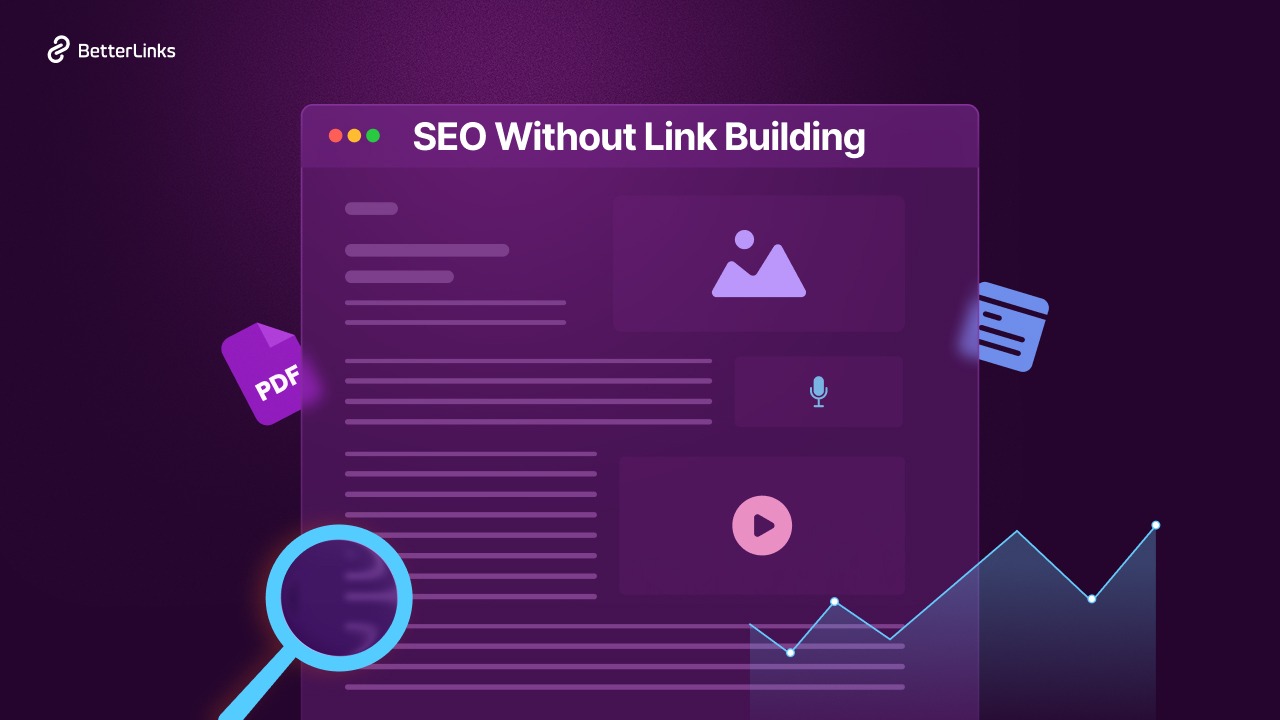
The answer is a resounding yes. While links remain a signal, they are no longer the only signal. Today, Google prioritizes topical authority, user experience and technical precision.
Proven Strategies to Rank in SEO without Backlinks
If you are a startup or a niche creator looking for link building strategies for new websites, the most effective strategy might actually be to stop chasing links and start building a superior user destination.
Here is a detailed guide on how to rank on Google without backlinks using 10+ proven, modern strategies.
1. Master the Hub And Spoke Topical Cluster
In the era of seo without backlinks, your site must prove it is an absolute authority in its niche. Google no longer ranks individual pages in a vacuum; it ranks ‘entities’ that demonstrate deep knowledge.
- The Pillar (Hub): Create a massive, 3,500-word definitive guide on a broad topic. This page serves as the foundation.
- The Spokes: Write 15–20 hyper-specific articles that branch off from the pillar. For example, if your hub is about ‘Digital Marketing,’ your spokes should be ‘How to set up GA4’ or ‘2026 Email Marketing Trends.’
- The Strategy: Use a rigorous internal linking structure. Every spoke must link back to the hub, and the hub must link out to every spoke. This creates a ‘Relevancy Loop.’ When Google’s crawlers enter your site, they find an interconnected web of information that proves you have covered every possible angle of a topic.
2. Target Zero-Competition Long Tail Keywords
The biggest mistake new websites make is trying to rank for ‘head terms’ like ‘Insurance’ or ‘Real Estate.’ Instead, focus on hidden gems where the competition is nonexistent.
- The Strategy: Use ‘Zero-Volume’ keywords. These are highly specific queries that SEO tools often misreport as having no traffic. Examples include ‘seo without link building for local plumbing businesses’ or ‘best ways to rank on Google without backlinks for a new organic skincare brand.’
- Why it works: Because these terms are so specific, the ‘big players’ ignore them. By creating the only high-quality page on the internet for that specific phrase, there is a chance of claiming the #1 spot almost instantly without a single external link.
3. Master Your On-Page SEO Fundamentals
Before hitting ‘publish,’ ensure your website content is fully optimized for both humans and search engines. While these steps may seem basic, they are the vital finishing touches that signal quality and relevance.
Use this checklist to audit your blog posts and landing pages:
- Title Tags: This is your digital first impression. Create a headline that is both enticing to clicks and includes your primary keyword near the beginning.
- Meta Descriptions: Think of this as your ‘elevator pitch.’ Write a concise, compelling summary that includes your primary and secondary keywords to boost your click-through rate (CTR).
- SEO-Friendly URLs: Keep your slugs short, clean and descriptive. Avoid random strings of numbers; instead, use your target keyword to tell users exactly what the page is about.
- Header Hierarchy (H1, H2, H3): Use headers to create a logical roadmap. This improves readability for users and helps search engine bots crawl the structure of your content.
- Image Optimization: Visuals should enhance, not slow down, your site. Use optimized file sizes for fast loading, and always include descriptive alt text to improve accessibility and image search rankings.
- External Linking: Do not be afraid to link out. Referencing credible, high-authority sources boosts your own ‘Trustworthiness’ (from E-E-A-T) and provides extra value to your audience.
4. Prioritize E-E-A-T (Experience, Expertise, Authoritativeness, Trustworthiness)
Google’s algorithms are now trained to look for ‘First-Hand Experience.’ This is the most important thing for seo without link building.
i. Experience (The “New” E)
This refers to the firsthand, real-world involvement of the content creator. Google wants to see that you’ve actually “walked the walk.”
- Example: A review of a hiking boot written by someone who actually hiked 50 miles in them is more valuable than a spec-sheet summary.
- How to show it: Use original photos, videos, personal anecdotes and specific “lessons learned.”
ii. Expertise
This focuses on the formal knowledge, skills, or credentials of the author.
- Example: A medical article written by a board-certified doctor vs. a hobbyist.
- How to show it: Highlight degrees, certifications and professional background in detailed author bios.
iii. Authoritativeness
This is about your reputation in the industry. It measures how much other experts and websites see you as a go-to source.
- Example: A legal blog that is frequently cited by major news outlets or government sites.
- How to show it: Build a strong backlink profile, get mentioned in reputable publications, and focus on “topical authority” by covering a subject deeply.
iv. Trustworthiness (The Core)
Trust is the most important pillar. If a site is untrustworthy, the other three pillars cannot save it. It encompasses accuracy, honesty and safety.
- Example: A site with a clear ‘about us’ page, contact info, transparent return policies, and secure (HTTPS) browsing.
- How to show it: Fact-check everything, cite your sources, keep content updated, and ensure your site is technically secure.
5. Technical Excellence And Core Web Vitals 2.0
If you do not have backlinks, your website must be technically flawless. A fast, stable site provides a better user experience, which Google views as a massive quality signal.
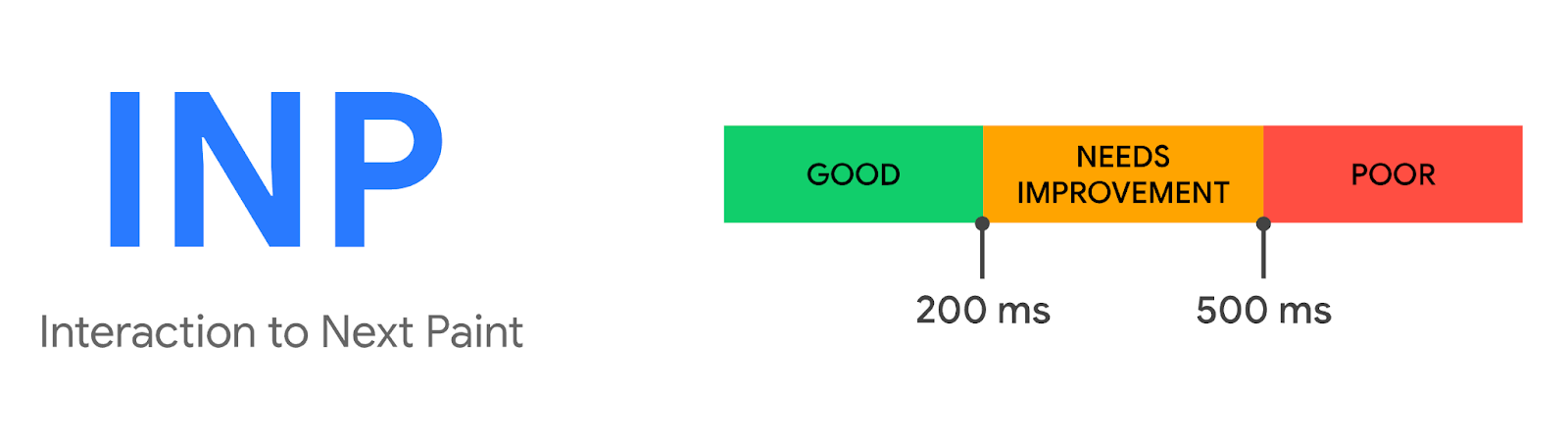
- INP (Interaction to Next Paint): As of 2026, INP is the king of metrics. It measures how quickly your site reacts when a user clicks a button or menu. It must be under 200ms.
Source: Google
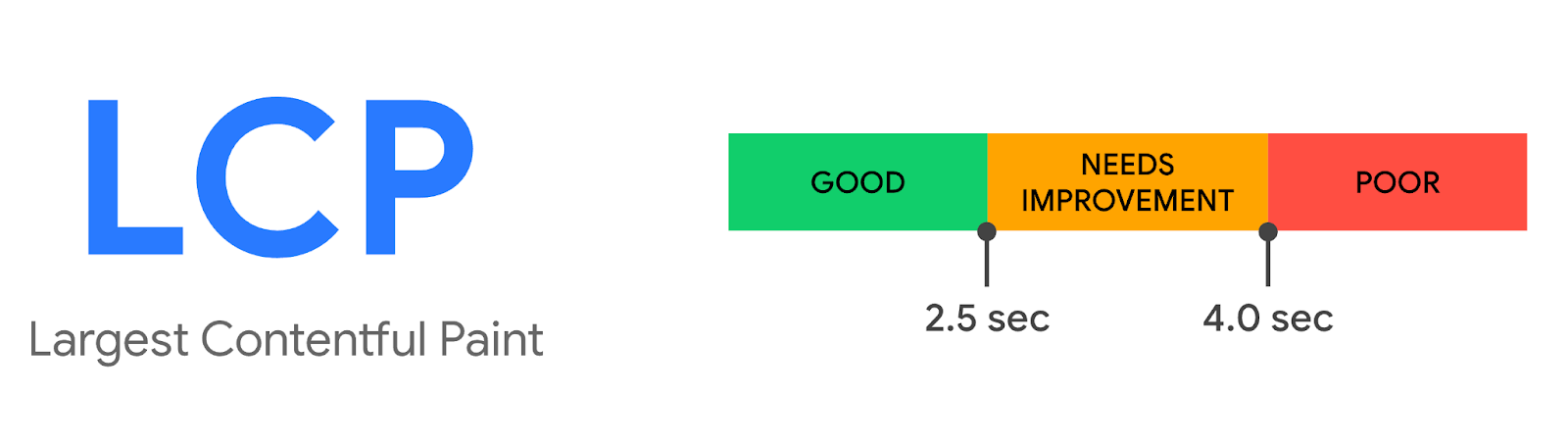
- LCP (Largest Contentful Paint): Your main content must load in under 1.2 seconds. Use WebP or AVIF image formats and a high-quality Content Delivery Network (CDN).
Source: Google
- The Edge: When two pages have similar content, Google will almost always favor the one that loads faster and is easier to navigate on mobile.
6. Semantic SEO: Optimize for Entities, Not Strings
Modern SEO is about ‘entities,’ the concepts and things that reside in Google’s Knowledge Graph.
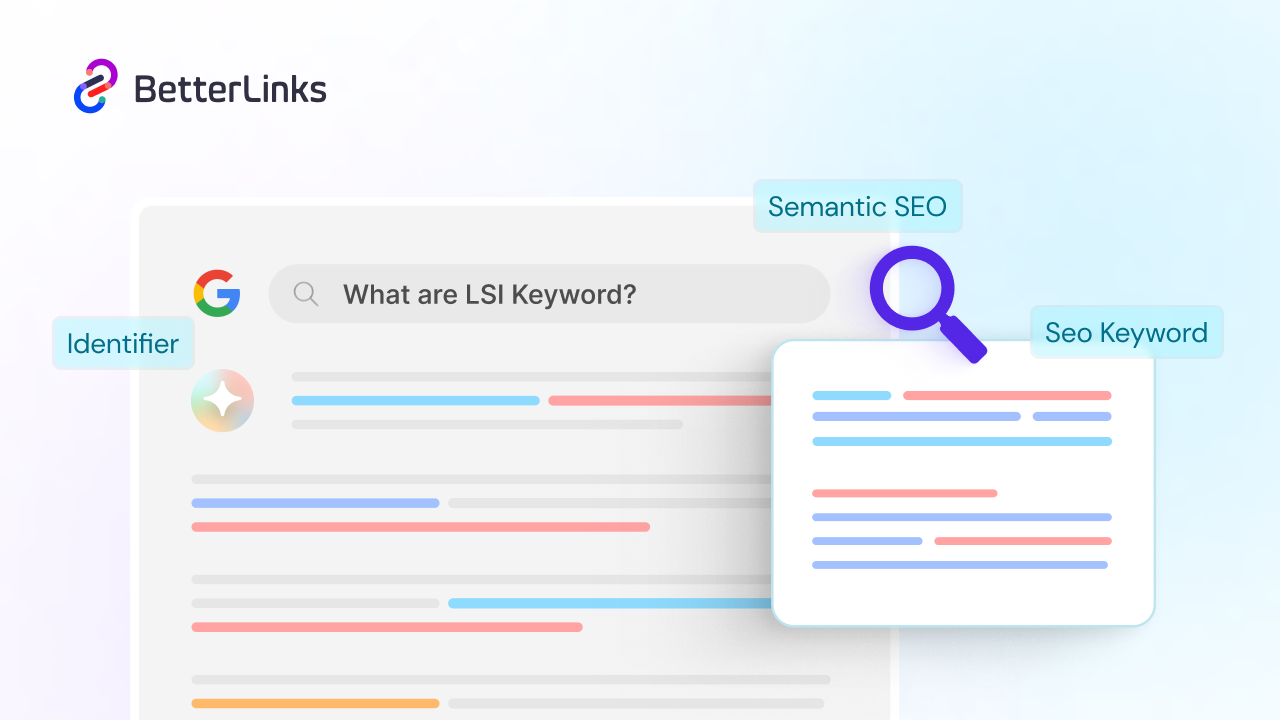
- The Strategy: Do not just repeat your primary keyword. If you are writing about seo without backlinks, you should naturally mention ‘crawl budget,’ ‘user intent,’ ‘schema markup,’ and ‘on-page signals.’ Google does not officially use LSI Keywords (Latent Semantic Indexing) as a direct algorithm, but they do heavily use semantic relevance, context and related terms (synonyms, entities, topics) to understand content, which is what the LSI concept represents for SEO.
- NLP Optimization: Use Natural Language Processing tools to ensure your writing is clear and covers the ‘vocabulary’ of your niche. This allows your content to show up in ‘AI Overviews’ and SGE (Search Generative Experience) results.
7. Strategic Internal Linking: Your Private Link Network
Internal links are the most underutilized effective link building strategies available. You have 100% control over the anchor text and the placement.
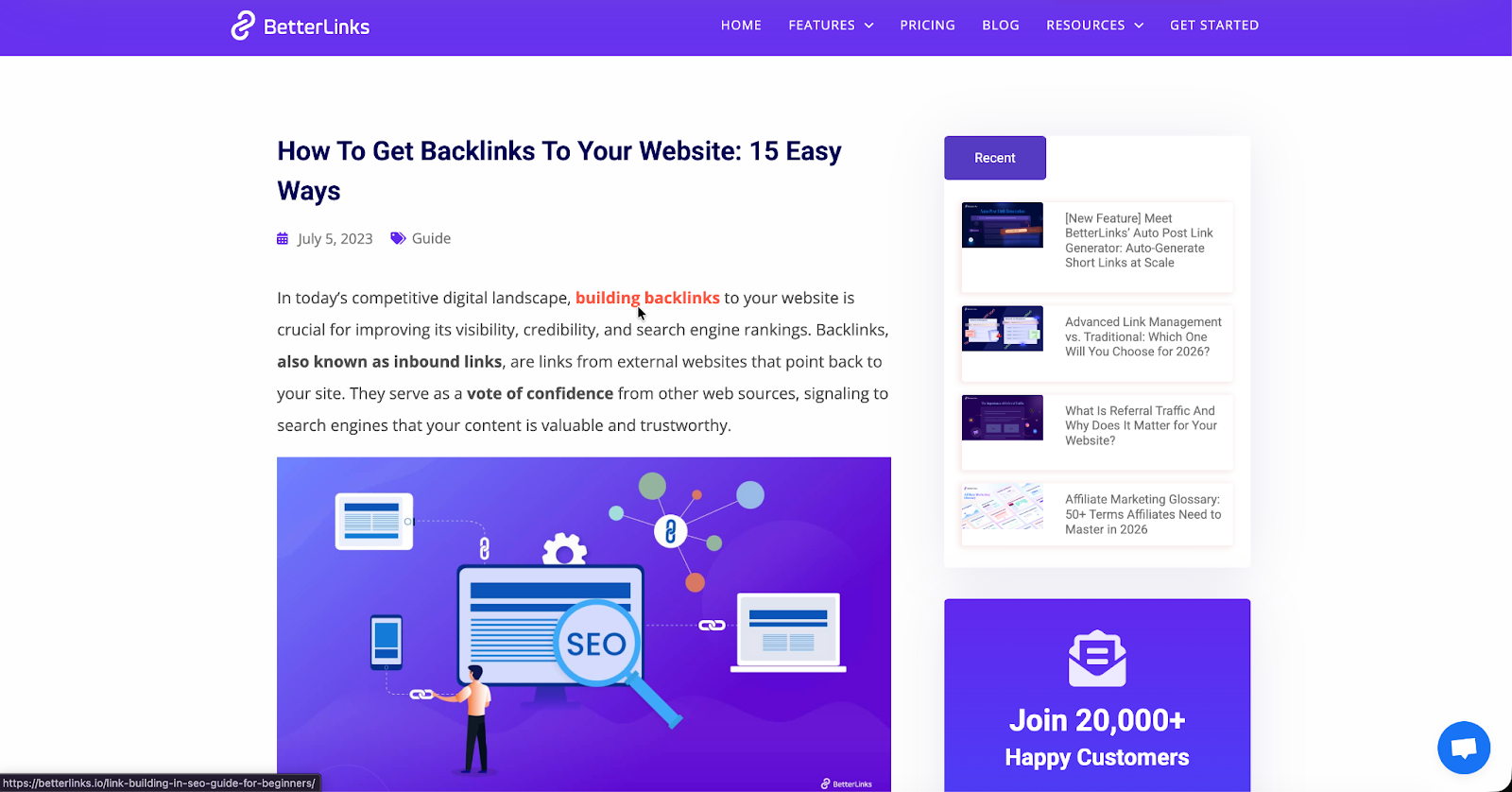
- The Power Link: Identify your ‘power pages,’ the ones that already have some traffic or a few natural links. Add a link from that power page to your new content.
- Descriptive Anchor Text: Do not use ‘click here.’ Use descriptive, keyword-rich anchors like ‘Check out our full guide on ranking on Google without backlinks here.’ This passes maximum context and ‘equity’ to the target page.
8. Direct Traffic And Social Signals
In 2026, Google looks at ‘Brand Velocity.’ If people are searching for your brand name or coming directly to your site, you become an authority in Google’s eyes.
- The Tactic: Build a presence on ‘Discovery’ platforms like Pinterest, YouTube, or LinkedIn. When you drive 500 people from a LinkedIn post to your blog, Google sees that traffic surge and realizes your content is in demand.
- Brand Mentions: Even if a news site mentions your brand without a link, Google can still associate your brand name with your specific niche, boosting your overall authority.
9. High-Engagement Multimedia (The Dwell Time Booster)
One of the most important link building strategies for new websites is not a link at all; it is a video.
- The Strategy: Embed a relevant 2-3 minute video at the top of every blog post. To embed video on your website (if it is WordPress built), you can check the solution like EmbedPress.
- The Impact: When a user clicks your link in Google and stays on your page for 4 minutes to watch a video, your ‘Dwell Time’ is excellent. High dwell time signals to Google that the user’s ‘Search Intent’ was satisfied. This prevents ‘Pogo-sticking’ (users clicking back to the search results), which is a major ranking factor.
10. Solve for Search Intent Better Than the Top 3
If you want to beat sites with thousands of links, you must be more helpful than they are.
- The Strategy: Analyze the current top-ranking pages for your keyword. Are they missing a checklist? Do they have outdated 2024 data? Is their layout hard to read?
- The “10x” Rule: Create a page that is 10 times better. Add a downloadable template, an interactive calculator, or a summarized “TL;DR” (Too Long; Did not Read) section at the top. If your page is the final destination for the user, Google will eventually move you to the top.
11. Win the SERP with Advanced Schema Markup
Schema markup is the secret language that tells Google exactly what your content is about.
- The Tactic: Use FAQ Schema to get your questions and answers right in the search results. Use HowToSchema for step-by-step guides. Use ReviewSchema to get those gold stars that increase your Click-Through Rate (CTR).
- The Benefit: A higher CTR (Click-Through Rate) signals to Google that users prefer your result over others, which can lead to a ranking boost even without a strong backlink profile.
12. Answer Engine Optimization (AEO): The Snippet-First Framework
In 2026, a huge portion of traffic will be captured by Google’s AI Overviews (AIO) and Answer Engines like Perplexity or Gemini. To rank here, you don’t need links; you need Clarity and Consistency.
- The Strategy: Implement an ‘Answer-First’ structure. For every H2 or H3 that asks a question, provide a direct, 2–3 sentence answer immediately below it.
- The Tactic: Use ‘Semantic Chunking.’ Break your content into small, digestible sections that an AI agent can easily scrape and cite.
- Why it works: AI Overviews prioritize content that is structured for ‘ingestion.’ By being the most ‘extractable’ source, you become the cited authority in the AI box at the top of the SERP, which effectively functions as a #0 ranking.
Comparing SEO Strategies: Backlinks vs Technical Authority
When it comes to SEO, backlinks and technical authority are two crucial strategies that can significantly impact your website’s ranking. Understanding their differences and how they work together is key to optimizing your site for search engines.
| Feature | Traditional Link-Building | SEO Without Link Building |
|---|---|---|
| Primary Cost | Money (Outreach/Fees) | Time (Quality/Research) |
| Control | Low (Depends on others) | High (You own the site) |
| Risk Factor | High (Google Penalties) | Low (Sustainable & Safe) |
| Main Focus | Referral Power | User Experience & Utility |
Can You Really Rank Without Backlinks?
Achieving seo without link building is not only possible; for many new websites, it is the only sustainable path forward. By focusing on effective link building strategies that involve internal linking, multimedia engagement and technical excellence, you build a foundation that won’t crumble during the next Google algorithm update.
If you are just starting out, remember that link building strategies for new websites should always start with ‘Content First.’ Once you have mastered the art of satisfying user intent and demonstrating topical authority, the links will eventually come to you naturally.
Is this blog helpful? Join our Facebook community to stay updated with the latest blogs, product reviews and WordPress solutions. Subscribe to our blog for in-depth tutorials, tips and visit our social media platforms for the newest updates.