CPA marketing in 2026 is not a casual side hustle you stumble into. The search results for this topic are dominated by authority sites backed by years of data, strong backlink profiles and real affiliate experience. To rank alongside them and to actually earn, you need to stop thinking like a reader and start thinking like a performance marketer.
In this guide, you will learn step by step how to earn from CPA networks as a complete beginner. From understanding what CPA marketing actually is to picking the right offers and driving targeted traffic, everything is covered here in plain, easy-to-follow language.
TL;DR (Too Long, Didn’t Read?)
A quick overview of what this guide covers so you can jump to the section that matters most to you:
| Topic | Key Takeaway |
| What CPA Marketing Is | A performance model where you earn per completed action, not per sale |
| Tracking Infrastructure | S2S postback tracking is non-negotiable at any serious scale |
| Incent vs Non-Incent | Using the wrong traffic type for an offer can get you banned instantly |
| Traffic Fraud | Bot traffic and low-quality leads get your account flagged and commissions shaved |
| Offer Selection | EPC, GEO targeting and conversion flow complexity matter more than headline payout |
| Audience Segmentation | Sending all traffic to one offer without segmentation destroys your data |
| Creative Optimization | Testing hooks, angles and ad formats is what separates profitable campaigns from dead ones |
| Scaling Strategy | Scale budgets by 15 to 20 percent increments only after stable CPA is confirmed |
| Best Networks 2026 | MaxBounty, PeerFly, Clickbooth, CrakRevenue, CPAlead |
| CPA Payout Rates | Ranges from $0.50 per email submit to $150+ per financial lead |
What Is CPA Marketing And Why It Is Harder Than It Looks
CPA stands for Cost Per Action. It is a performance-based model in which an affiliate earns a commission every time a referred user completes a specific action defined by an advertiser. That action might be submitting an email address, signing up for a free trial, downloading an app, filling out a loan application or making a purchase.
The model sounds simple on paper. In practice, it is a precision sport. Here is what the basic flow looks like:
- An advertiser defines a target action and sets a payout per conversion
- A CPA network aggregates these offers and connects them with affiliates
- You, as an affiliate, pick an offer, grab a tracking link and drive traffic to it
- When a user completes the required action, the network records the conversion and credits your account
What makes this hard is everything that sits between ‘drive traffic’ and ‘get credited.’ Traffic quality, tracking accuracy, offer compliance, audience matching and creative performance all determine whether you earn or burn your budget. This guide covers all of it.
The Real Economics of CPA Marketing in 2026
Before you promote a single offer, you need to understand the financial logic behind CPA marketing. This is where most beginners operate completely blind.
EPC
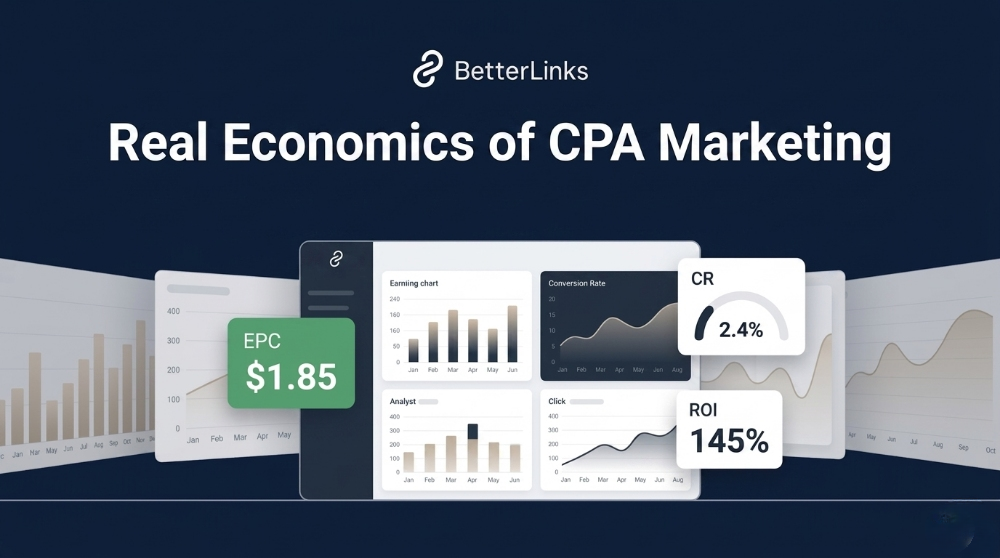
Earnings Per Click is the single most useful metric for comparing offers. It tells you on average how much affiliates are earning for every click sent to that offer. A $50 payout offer with a 1 percent conversion rate gives you an EPC of $0.50. A $5 payout offer with a 12 percent conversion rate gives you an EPC of $0.60. The second offer is more profitable even though its payout is ten times lower.
CR
Conversion Rate tells you how many visitors complete the required action. For simple email submits, a CR of 10 to 20 percent is achievable. For credit card submit offers, you might see 1 to 3 percent. Knowing this before you build your campaign determines how much traffic you need to reach profitability.
ROI
Return on Investment is your actual bottom line. If you spend $100 on traffic and earn $140 in commissions, your ROI is 40 percent. This sounds good, but paid traffic campaigns often run at negative ROI for the first week while you gather data. This is normal and expected. It is called the testing phase and every serious affiliate budgets for it.
📌 A common scaling approach in CPA campaigns is to increase daily budgets gradually by 15 to 20% increments while expanding targeting to additional GEOs or high-potential audience segments. Never scale before you have confirmed a stable, profitable CPA across enough conversion volume to be statistically meaningful.
What Is CPA Tracking: The Infrastructure That Determines Whether You Get Paid
This is the section that separates serious affiliates from amateurs. Most beginner guides tell you to ‘track your results.’ That is not enough. You need to understand exactly how tracking works and why the method you choose directly affects your income.
Network Tracking vs Third-Party Tracking
Network tracking is the basic tracking system built into every CPA network. When a user clicks your link, the network logs the click. When they convert, the network records the sale. This works for beginners running low-volume organic traffic where accuracy at the margin does not matter much.
Third-party tracking means using a dedicated tracking platform like Voluum, RedTrack, BeMob or Binom alongside your network. This tool sits between your traffic source and the offer. Every click that enters your funnel is tagged with a unique identifier. You can see exactly which ad, which landing page variation, which audience segment and which device generated each conversion.
Tools like Voluum, RedTrack, BeMob and Binom allow affiliates to monitor EPC, conversion rate and ROI across multiple traffic sources and they support server-to-server postback integration, which has become the non-negotiable standard for accurate attribution in CPA campaigns.
📌 When you are running paid traffic across multiple ad sets, creative variations and offers simultaneously, network tracking alone is useless. You cannot optimize what you cannot isolate.
What Is a Postback URL And Why It Matters
A postback URL (also called S2S or server-to-server tracking) is the most reliable conversion tracking method available to affiliates.
Here is how it works in plain terms:
- A user clicks your affiliate link and is assigned a unique click ID
- They visit the offer page from the CPA network
- If they complete the action, the network’s server fires a signal (the postback) back to your tracker
- Your tracker matches the click ID to the original ad, audience and landing page that generated it
- You now know exactly what produced that conversion
📌 Rather than relying on browser pixels or cookies, which can be blocked or wiped by privacy settings, a postback system sends conversion data directly from the advertiser’s server to the network’s server, meaning fewer gaps, fewer missing conversions and more confidence in attribution.
Pixel Tracking vs Postback Tracking: Which to Use
Pixel tracking and postback tracking are two common ways to measure conversions in WordPress. Pixel tracking uses browser cookies to record user actions, while postback tracking sends data directly from the server.
Understanding how each works will help you choose the right method for your site:
| Factor | Pixel Tracking | Postback (S2S) Tracking |
| Setup Difficulty | Easy | Moderate |
| Cookie Dependency | Yes | No |
| Ad Blocker Vulnerability | High | None |
| Cross-Device Accuracy | Weak | Strong |
| Privacy Compliance | At risk | GDPR/CCPA friendly |
| Recommended For | Beginners, low-volume organic | Paid traffic, scaling campaigns |
📌 Using S2S postback URLs is a more secure and reliable method to count conversions and is highly recommended to use whenever possible, since this type of tracking does not depend on cookies and works even if a visitor has cookies blocked on their browser.
When You Absolutely Must Use a Third-Party Tracker
You cannot avoid a dedicated tracker if you are doing any of the following:
- Running paid traffic on Facebook Ads, Google Ads, TikTok Ads or native networks
- Promoting more than one offer at the same time
- Testing multiple landing pages against each other
- Trying to scale a campaign beyond $50 per day in ad spend
- Working with traffic sources that do not provide conversion-level reporting
📌 Without a tracker in these scenarios, you are spending money completely blind. You will not know which ad is converting, which audience is profitable or which landing page is leaking traffic. You will optimize based on guesswork and run out of budget before finding a winner.
Traffic Quality And Fraud: The Silent Account Killers
Traffic quality and fraud are often overlooked, yet they can quietly damage ad accounts and even lead to sudden suspensions. Poor traffic sources, fake clicks and fraudulent conversions not only waste budget but also put your WordPress business at risk.
This is the topic that most beginner guides skip entirely and it is the one that ends more affiliate accounts than anything else.
What Is Bot Traffic And Why It Destroys Your Account
Bot traffic refers to non-human visitors generated by automated scripts or programs. In CPA marketing, bot traffic is a serious threat because it can look like real clicks and even trigger pixel-based conversions. But networks are not fooled for long.
Affiliate fraud occurs when affiliates artificially inflate engagement metrics such as clicks or traffic to earn higher commissions, and activities like using bots to flood a website with traffic are examples of unscrupulous practices that reputable networks actively detect and penalize.
CPA networks use sophisticated fraud detection tools that analyze dozens of signals including IP reputation, device fingerprinting, behavioral patterns, session duration, click velocity and conversion timing.
When your traffic triggers these signals, two things happen:
1️⃣ First, the network shaves your leads, meaning they simply do not count some of your conversions while charging your traffic source for the clicks.
2️⃣ Second, if the pattern continues, they will ban your account and withhold any pending payments.
Low-Quality Incentivized Traffic Traps
Some traffic sources sell what looks like ‘cheap, high-volume’ traffic. In practice, this is often low-quality traffic from incentivized sources, content farms or bot networks. Even if it is technically ‘real’ human traffic, if those users have no genuine interest in the offer, your conversion rate will be near zero and your lead quality signals will tank.
Networks measure lead quality beyond just whether the action was completed. Advertisers report back on how those leads actually behave downstream. If your signups never open emails, your app installs never reach session three and your loan applicants never return calls, the advertiser flags your traffic as low quality. The network receives that signal and your account is reviewed.
What Is Lead Shaving
Lead shaving is when a CPA network or advertiser does not credit you for conversions that were actually completed. It is one of the most controversial topics in affiliate marketing and it happens for two reasons.
✅ The first is legitimate. If your traffic is low quality, violates offer terms or triggers fraud signals, the network removes those conversions before crediting you. This is their right and it is written into every network agreement.
❌ The second is not legitimate. Some disreputable networks quietly shave a percentage of genuine conversions to increase their own margins. This is why choosing a reputable, well-reviewed network matters enormously. Always check reviews on sites like Affpaying and ask your affiliate manager for your click-to-conversion ratio so you can cross-reference it against your own tracker data.
Incent vs Non-Incent Offers: A Distinction That Can Get You Banned
Incent offers reward users for completing actions, while non‑ incentive offers rely on genuine interest. Mixing them up or promoting the wrong type can trigger compliance issues and even get your account banned.
What Are Incentivized (Incent) Offers?
Incentivized traffic means you are offering users something in exchange for completing the offer action. For example, you tell users to ‘download this app and get 500 coins’ or ‘fill out this form and get a free gift card.’ The user completes the action not because they are genuinely interested in the product but because they want the reward you are offering.
Some CPA offers explicitly allow incentive traffic. These are usually low-payout actions like app installs, email submits or content locker completions. When an offer says ‘Incent: Yes’ in the offer listing, it means you can use this type of promotional method.
What Are Non-Incent Offers?
Non-incentivized traffic means the user is genuinely interested in the offer itself. They click your link because they want to sign up for that service, apply for that financial product or download that software. There is no external reward being promised.
When an offer says ‘Incent: No’, using incentivized traffic to promote it is a direct violation of the offer terms. The consequences are serious.
What happens when you use incent traffic on a non-incent offer:
- The advertiser receives leads from people who have zero genuine interest in their product
- Conversion quality downstream collapses (no purchases, no engagement, no lifetime value)
- The advertiser reports this back to the network
- The network investigates your traffic source and promotional methods
- Your account is suspended and commissions from that campaign are reversed
The Financial Logic: Why High-Payout Incent Offers Are Dangerous
You will occasionally see incentive offers paying $30, $50 or even $100 per conversion. This seems attractive but the risk is disproportionately high. As advertisers in the CPA space have noted publicly, paying $30 or more for an incentivized conversion is not sustainable for a business because those users rarely convert into real customers. Advertisers know this and they will often reject bulk incent traffic on high-payout offers, leaving you with wasted promotional costs and reversed commissions.
📌 Stick to this rule: Always match your traffic type to the offer terms. If it says incent: no, promote it only with genuine, interest-based traffic. If you are not sure, ask your affiliate manager before you spend a single dollar.
How to Choose CPA Offers to Promote: A Strategic Framework
Choosing the right CPA offers to promote is not about picking the highest payout. It is about finding the intersection of four factors: audience match, conversion simplicity, traffic compatibility and offering EPC.
Step 1: Confirm the Offer Allows Your Traffic Type
Before anything else, check the offer restrictions. Look for the allowed traffic sources listed in the offer description. Common categories include search traffic, social media, email marketing, native ads, push notifications and display ads. If your traffic source is not listed as allowed, do not promote the offer. Full stop.
Step 2: Evaluate the Conversion Flow
Read the entire conversion path. How many steps does the user need to complete? A single-page email submit is far easier to convert than a multi-step credit card application. Simpler conversion flows mean higher conversion rates but usually lower payouts. More complex flows mean lower conversion rates but much higher payouts. Your job is to find offers where your traffic’s intent level matches the complexity of what is being asked.
Step 3: Check EPC And CR in the Network Dashboard
Most CPA networks display EPC data for each offer. Use this as your primary filter. An offer with an EPC of $1.20 will almost always outperform an offer with an EPC of $0.30 regardless of headline payout.
Step 4: Verify GEO Targeting Restrictions
Every offer has geographic restrictions. Some only accept traffic from the United States. Others are open to multiple Tier 1 countries including the UK, Canada and Australia. Some are specifically designed for Tier 2 or Tier 3 markets. Always confirm that the offer accepts traffic from the locations where your audience is based. Sending traffic from an unsupported GEO results in zero conversions and wasted spend.
Step 5: Talk to Your Affiliate Manager
Your affiliate manager has real-time data that no public dashboard shows. They know which offers are converting best this week, which traffic sources are performing above average and which offers have been recently updated with better creatives. This conversation takes five minutes and can save you weeks of failed testing.
Best CPA Networks 2026: Where to Actually Start
Choosing the right CPA network can make or break your affiliate journey. With so many options out there, it is easy to get lost. In this guide, we highlight the best CPA networks for 2026 and show you where to actually start if you want reliable offers, fair payouts and long‑term growth.
A breakdown of reliable networks that have proven track records with affiliates at all levels:
MaxBounty
MaxBounty is one of the most respected CPA networks in the performance marketing industry. They offer a large catalog of offers across finance, health, software and insurance verticals. Weekly payments, dedicated affiliate managers and strong educational resources make this a solid first choice. Their approval process is selective, which actually works in your favor because it means the network maintains quality on both sides.

PeerFly
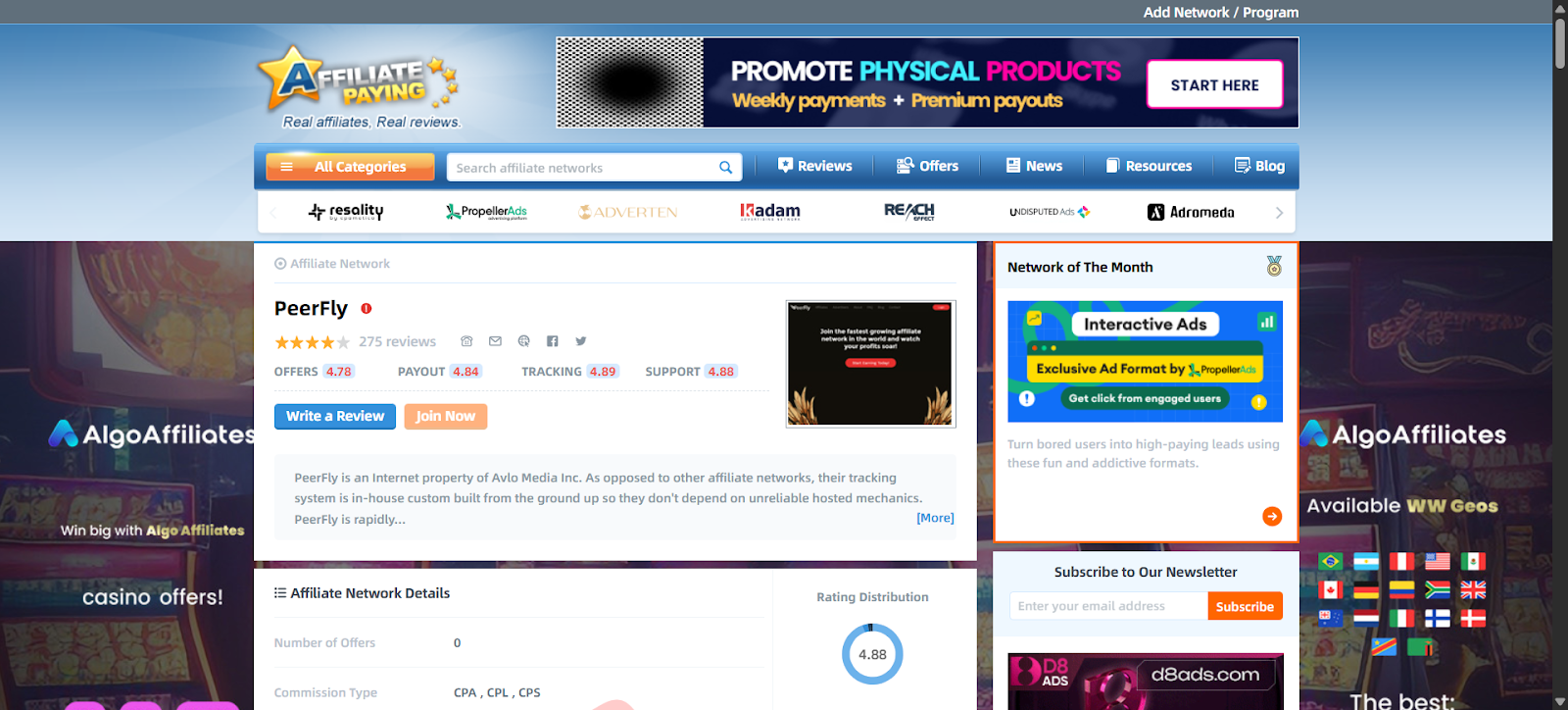
PeerFly stands out for its flexible payment options including PayPal, Payoneer, Bitcoin and bank wire. They are known for matching competing network payouts on identical offers, which makes them useful for affiliates who want to consolidate promotions in one place.
Perform[cb]
Perform[cb] uses AI-powered optimization technology across their traffic inventory. They cover a wide range of verticals and are known for strong fraud detection infrastructure, which protects affiliates from being flagged for traffic issues caused by ad network-level bot problems.
![Perform[cb]](https://betterlinks.io/wp-content/uploads/2026/04/image-11.png "How to Earn from CPA Networks: The Complete Strategy Guide for 2026 14")
CrakRevenue
CrakRevenue acts as a bridge between affiliates and advertisers, helping affiliates monetize their traffic and helping advertisers gain more visibility and sales through advanced promotional tools and reliable payments. They are well known for competitive payouts and strong affiliate support.
CPAlead
CPAlead offers instant approval for many new affiliates, a beginner-friendly dashboard and access to a large catalog of offers. Their content locking tools are useful for affiliates who run content-based traffic strategies.
Traffic Monetization Strategies: Matching Your Source to Your Offer
The biggest mistake new affiliates make is choosing a traffic source first and then trying to find an offer that fits. The better approach is to identify what type of offer converts well with your audience and then select the appropriate traffic source.
Organic SEO Content
Publishing helpful, keyword-optimized content around your niche is still one of the highest-ROI long-term strategies in CPA lead generation. If you rank a single article for a high-intent keyword, that page can generate commissions for years without ongoing ad spend. The trade-off is time. SEO traffic takes months to build and requires consistent content production and link building.
Paid Social Traffic (Facebook & TikTok)
Facebook Ads and TikTok Ads are powerful for CPA campaigns because of their audience segmentation capabilities. You can target by age, interests, behaviors, lookalike audiences and retargeting pools. Platform-native creative that follows a platform’s aesthetic conventions delivers 40 to 60 percent better CPA and ROAS than polished brand advertisements simply reformatted for the platform. This means your TikTok creative needs to look like TikTok content, not a banner ad.
Native Advertising
Native ads blend into editorial content on publisher sites. Networks like Taboola, Outbrain and MGID are popular for CPA campaigns in niches like health, finance and software. Native traffic is generally warmer than display traffic because users are in a content-consumption mindset rather than a browsing mindset.
Push Notification Traffic
Push notification ads are delivered directly to users’ devices through browsers or apps. All push notification traffic comes from real users, meaning it is bot-free by nature, and users tend to be more engaged with messages, leading to improved retention rates of up to 20 percent. Push traffic works well for simple, high-volume offer types like app downloads, sweepstakes and email submits.
Email Marketing
Building and monetizing an email list is one of the few traffic strategies where you own the asset. Instead of renting attention from ad networks, you control the relationship. An email list of 10,000 engaged subscribers in a specific niche can generate consistent CPA commissions across multiple campaigns without ongoing ad spend.
Audience Segmentation: Stop Treating All Traffic the Same
This is where the gap between a beginner and an experienced CPA affiliate becomes most visible. Sending all your traffic to one offer with one message and one landing page is the amateur approach. Real optimization requires segmentation.
What Is Audience Segmentation in CPA Marketing?
Audience segmentation means dividing your traffic into distinct groups based on shared characteristics and serving each group a tailored message, landing page or even a different offer. The goal is to increase relevance at every touchpoint, which directly increases conversion rates.
Common segmentation variables for CPA campaigns include:
- Device type: Mobile users and desktop users behave differently and convert at different rates
- GEO: Traffic from the United States behaves differently from traffic in the UK, Canada or Australia
- Traffic source: A user coming from a Facebook ad has different intent than one coming from a Google search
- Funnel position: First-time visitors need awareness messaging; returning visitors need stronger calls to action
How Segmentation Works in Practice
Imagine you are promoting a health supplement offer. Instead of sending all your traffic to one generic landing page, you segment as follows:
🇺🇸 Facebook mobile traffic from the US aged 35 to 55 sees a landing page focused on energy and daily performance
🇬🇧 Desktop traffic from the UK sees a landing page emphasizing natural ingredients and safety
🎯 Retargeted visitors who already clicked but did not convert see a landing page with a stronger offer or social proof element
Creative Optimization And Split Testing: What Actually Moves the Needle
Creative optimization is the difference between campaigns that consistently improve and campaigns that plateau. Every element of your campaign funnel is a variable. Your job is to test those variables systematically until you find the combinations that convert at scale.
What to Test in Your CPA Campaign
There is an order of priority when it comes to testing. Start with the elements that have the highest impact on performance.
🧪 Headline and Hook: The first thing a user sees when they land on your page or see your ad. The first moments of video content determine success or failure, with videos capturing attention within the first two seconds dramatically outperforming content that builds up over time. The same principle applies to written headlines. A stronger hook can double your click-through rate without changing anything else.
🧪 Landing Page Layout and CTA: Test different page structures, button colors, headline placements and form lengths. Shorter forms generally convert better. Single-column layouts often outperform complex multi-element pages on mobile.
🧪 Ad Creative Format: Test static images against video. Test lifestyle imagery against product-focused imagery. Test short video against longer explainer formats. Each offer and audience combination will have a winning format that only testing can reveal.
🧪 Offer Angle: The same offer can be promoted from multiple angles. A weight loss supplement can be framed around energy, confidence, health or speed of results. Different angles resonate with different audience segments and finding the right match dramatically improves conversion rates.
The Right Way to Split Test
Run only one variable at a time. If you change the headline and the landing page layout simultaneously and performance improves, you do not know which change caused it. This prevents you from building reliable data.
Send enough traffic to each variation to reach statistical significance before making a decision. A general rule of thumb is at least 100 clicks per variation before drawing any conclusions and ideally 200 to 500 clicks for conversion-level decisions.
Keep a testing log. Record every test you run, the hypothesis, the result and the decision you made. This log becomes one of your most valuable strategic assets as your campaigns grow.
Step-by-Step Guide to Launch Your First CPA Campaign
Now that you understand the basics, here is a practical walkthrough of how to launch your very first campaign and start to Earn from a CPA Network.
Step 1: Sign Up for a CPA Network
Pick one network from the list above and apply. Use a professional tone in your application and be clear about your traffic source.
Step 2: Explore Available Offers
Browse the offer library inside your network dashboard. Use filters to sort by niche, payout or EPC. Shortlist two to three offers that match your audience.
Step 3: Set Up a Landing Page
A landing page is a single web page designed to warm up your visitor before they click through to the offer. It builds trust and increases conversions. You can use simple tools like WordPress to build one quickly.
Step 4: Drive Traffic to Your Landing Page
Choose your traffic source and start sending visitors to your landing page. If you are using SEO, publish helpful content with your link included. If you are using paid ads, set up your campaign with a small daily budget and monitor results.
Step 5: Track Your Results
Use the tracking tools provided by your CPA network and consider a third-party tracker like Voluum or RedTrack. Monitor your click-through rate, conversion rate and earnings daily.
Step 6: Optimize and Scale
Once you identify what is working, double down on it. Pause underperforming offers or traffic sources. Increase your budget or content production for campaigns that are generating positive returns.
Common Mistakes That Kill CPA Campaigns Before They Start
Every experienced affiliate has made the following errors. Learning them before you spend money is worth more than any tool or tactic:
❌ Sending traffic directly to the offer without a pre-lander. Warming up your visitor before they hit the advertiser’s page consistently improves conversion rates.
❌ Using incentive traffic on non-incent offers. This is a fast path to account suspension and reversed commissions.
❌ Not reading the offer terms. Every offer has restrictions on traffic sources, promotional methods and GEO. Violating any of them voids your commissions.
❌ Scaling before confirming a stable CPA. Increasing spend before your data is solid amplifies losses, not profits.
❌ Ignoring your affiliate manager. These people have real-time data and a direct interest in helping you succeed. Use them.
❌ Choosing offers by payout alone. A high payout with a low EPC is a trap. Always evaluate EPC first.
❌ Treating all traffic as one audience. Segmentation is not optional for serious campaigns. It is the optimization mechanism.
Start Earning from CPA Networks Today
CPA marketing is one of the most beginner-accessible ways to earn money online. You do not need a product, a massive following or a huge budget to get started. What you do need is a clear plan, the right network, the right offers and a consistent source of targeted traffic.
The steps laid out in this guide give you everything you need to move from zero to your first commission. Pick one CPA network from the list above, choose an offer that matches your audience and start driving traffic using the method that suits you best.
Start today, stay consistent and treat every campaign as a learning experience. Your results will improve with every test you run.
Is this blog helpful? Join our Facebook community to stay updated with the latest blogs, product reviews and WordPress solutions. Subscribe to our blog for in-depth tutorials, tips and visit our social media platforms for the newest updates.
FAQs About How to Earn from a CPA Network
Check out the most frequently asked questions about earning from a CPA Network: