Say you are reading about website management trends in 2026 when you come across a curious paragraph about the benefits of incorporating AI into your site-creation workflow, which then leads you to an AI-powered marketing SaaS. Maybe you were looking for such a solution, but you did not discover it on your own. This journey you experienced is referral traffic. And you too can make use of SEO KPIs like referral traffic to bring qualified leads and visitors from trusted sources to your WordPress site.
Want a detailed answer to the question ‘What is referral traffic?’ Read on.
This blog breaks down the complete playbook: what website referral traffic is, where it comes from, how to measure it and the best practices to turn it into a consistent growth machine for your website.
Dissecting Website Referral Traffic: What It Is, Where It Comes From & Why It Matters
Referral traffic refers to the visitors coming to your website via links from external sources (blogs, social media, partners, etc.), and not search engine direct entry, sponsored search results, or direct URL entry. When someone clicks a link to your page from another site, this session is logged as a referral on your WordPress link management platform. These links often carry UTM parameters, allowing you to pinpoint exactly which sources and campaigns are driving the most engaged users.
For example, you can get referral traffic from a news article, a product review, a guest post on another blog, or a share on LinkedIn. The right backlinks act as steady sources of traffic for your website, often shared across diverse social groups and networks, helping more users discover your content.
The Mechanics of How Referral Traffic Works
Referrals boost your website traffic, but how? Mechanically, it works something like this:
A visitor clicks a link → The browser sends data about the source of the click (the referring URL) → Your analytics tool records & identifies this referral data → Tags like UTM parameters (if added) capture the granular details.
This process allows you to understand where your traffic originates, which content is driving engagement and which audiences are discovering your site. It provides insight into your brand’s visibility online and helps quantify the value of partnerships, backlinks and other referral sources.

Sources of Website Referral Traffic
The sources of website traffic can be diverse and depend heavily on your marketing and networking efforts. Ranging anywhere from guest blog posts to full-on media or press coverage, different sources of traffic variably affect digital marketing metrics like referral volume, engagement and conversion rates. Take a look at some of the clusters of referral traffic sources below:
Organic Referrals
Organic referrals are unpaid backlinks that naturally drive traffic to your website when other creators, bloggers, or platforms reference your content. These links signal credibility and relevance, often bringing engaged users who are already interested in your niche. But these can be tracked less easily as there are often no UTMs associated.
You can get organic website traffic from forums and Q&A sites like Reddit, Quora and niche community boards; blog mentions where unpaid backlinks appear in articles; directories and listing sites such as Google Business Profile, Yelp, TripAdvisor, or industry-specific directories; and educational materials including webinars, online courses, eBooks, whitepapers and PDFs.
Social Referrals
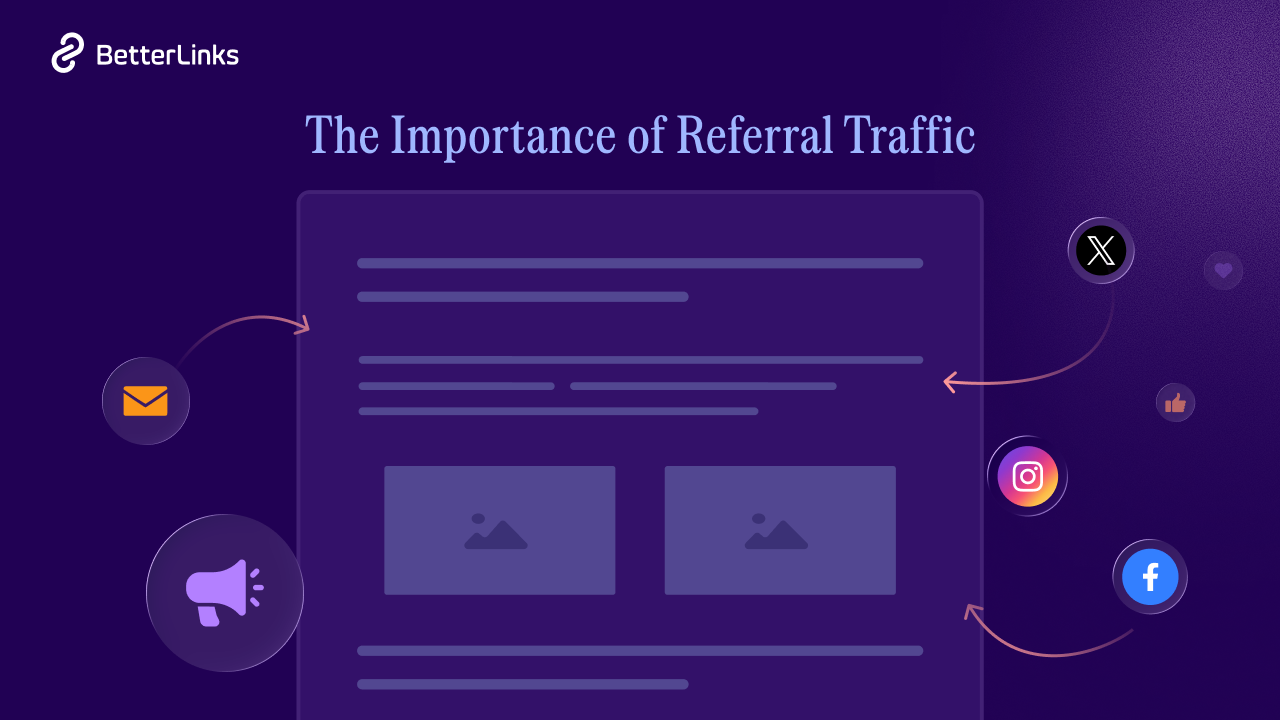
Social referrals are visitors who come to your website via social media platforms, often sparked by shares, mentions, or posts. When people share your links, your content can spread quickly, reaching more people who are already interested in what you offer. Today, social media is one of the most powerful ways to get visitors to your site. 89% of marketers get more brand visibility from networks like Facebook, LinkedIn, X, Instagram and Reddit.
Images and videos perform way better than plain text, generating up to 650% more likes, shares, and clicks. Long-term success with social referrals comes from building relationships, engaging with your audience and encouraging loyal followers to share your content naturally.
Email Referrals
Email referrals are visitors who arrive at your website via links in emails, often through marketing campaigns, newsletters, or personal messages. This type of referral is highly targeted, as recipients have already shown interest in your brand or content, often resulting in higher engagement and conversion rates.
Email referrals have the highest trackability in terms of analytics, as you can customize your link UTMs freely when the referral source is one of your channels. Want to up your email game and get more referrals? Automate your email marketing workflow.

Partner, Media & Affiliate Referrals
Partner, media and affiliate referrals are traffic coming from strategic collaborations, press features, or affiliate promotions. These referrals use a trusted audience and the influence of other websites or partners to bring people who are likely interested in your brand, which can increase trust and lead to more sales or sign-ups.
You can get affiliate referrals from partner websites through collaborations and link exchanges, affiliate programs where partners promote your products via tracked links, guest blog posts on other industry sites that include backlinks, media coverage or press mentions in news articles and online magazines and comparison websites that link to your business while comparing products or services.
Why Referral Traffic Matters
Visitors from referrals are often more engaged, more willing to take action and already trust you a little more, having been warmed up to your presence. Referral traffic also acts as an SEO KPI as strong referral traffic signals quality backlinks and engaged visitors, which indirectly boost your site’s search performance.
- Boosts SEO & Authority: Referral links from trusted websites make search engines see your site as more credible, helping you rank higher.
- Brings High-Intent Visits: Visitors coming from other sites usually already know something about you, so they are more likely to engage and convert.
- Expands Brand Reach: When other websites share your content, your brand reaches people you might not have reached on your own.
- Validates Growth Channels: Referral traffic analytics expose which partners, creators and content types deliver results.
- Cost-effective Website Traffic: Referral traffic analytics also help you grow traffic efficiently, so you only invest in partners and content sources that actually deliver results.
- Builds Networks & Partnerships: When you keep getting referral traffic, it helps strengthen your relationships with media outlets, influencers and partner brands.
Referral Traffic Analytics: Understanding Your Website Traffic Metrics
Referral Traffic analytics can be assessed using Google Analytics 4’s Traffic Acquisition and User Acquisition reports. You can see which domains are sending visitors, along with key engagement metrics. Other tools, like Semrush, show how your traffic is split across sources. SimilarWeb and Ahrefs let you see your competitors’ top referring sites
Without proper tracking, it is hard to know which of your links work and which do not. Measuring clicks, conversions and traffic sources can feel like guesswork. Missed opportunities to optimize campaigns for higher engagement and sales are all too common.
For WordPress users specifically, a link management plugin like BetterLinks provides comprehensive link management from campaign URL creation, three types of link redirection, a full-site link scanner for identifying broken links, to analytics and much more. Explore the complete suite of BetterLinks features to see all that you can do with it.

High domain authority, conversion rates and engagement on the source page are key indicators for assessing the quality of your referral links. Let us explore some digital marketing metrics you can use to quantifiably measure your website’s referral traffic.
- Domain Authority (DA) / Domain Rating (DR): Use tools like Ahrefs to see the score of the backlink site (usually 0–100). Higher scores indicate stronger, more credible sites.
- Referral Traffic Volume: Track how many visitors come from the link via Google Analytics or your WordPress plugin. More traffic = higher potential value.
- Bounce Rate from Referrals: Percentage of visitors who leave immediately. Lower bounce rates indicate higher engagement.
- Average Session Duration & Pages per Visit: Longer visits and more pages viewed per referral suggest the traffic is interested and relevant.
- Conversion Rate: Number of referral visitors completing goals (sales, sign-ups, downloads). High conversion = high-quality referral.
- Link Type & Follow Status: Count how many links are dofollow (pass SEO value) versus nofollow (less SEO impact).
- Engagement/Share Metrics on Source Page: For content-driven links, measure social shares, comments, or other engagement. More engagement often correlates with higher referral quality.
Distinguishing Between Good vs. Bad Referral Traffic
What do we refer to when we talk about good versus bad referral traffic? Good sources of referral traffic are those that reinforce your credibility and position your site as a high domain-authority resource. Bad sources of referral traffic do the opposite, undermining trust and working against the very benefits referral traffic is meant to deliver.
| Good Referral Traffic | Bad Referral Traffic |
|---|---|
| Source Credibility & Fit Comes from trusted, high-authority sources that closely align with you. | Spam & Bot Activity Includes fake or bot traffic that skews analytics and misrepresents referral sources in GA4. |
| User Intent & Readiness Attracts informed visitors who understand their problem and your solution, speeding up the sales cycle. | Relevance & Accuracy Issues Comes from irrelevant or outdated sources that misrepresent your current offerings, audience, or positioning. |
| Engagement Quality Shows high engagement with low bounce rates, longer sessions, and multiple page views. | Low-Intent Referrals Brings in leads who are not interested or aware, leading to dead-end conversations. |
| SEO & Authority Impact Builds strong backlinks from relevant sites, boosting authority and search rankings. | Poor Engagement Signals Shows almost all visitors leaving immediately, with very short sessions and no further engagement. |
| Revenue & Conversion Predictability Referrals should result in conversions and revenue typically ranging from 2% to 30%. | Quota-Driven Networking Referrals Comes from referrals shared just to meet quotas, not to create real business opportunities, creating noise instead of growth. |
How to Increase Referral Traffic And Improve Your WordPress Link Management
Getting referral traffic has more to do with strategic link building and relationship management than it does with luck and just good quality content. But link-worthy content is the cornerstone for better backlinks. Here is how you can drive consistent, high-quality traffic to your WordPress site:
Create Link-Worthy Content
To attract high-quality referral links, focus on creating link-worthy content. Create useful resources such as guides, tutorials, case studies, or original research that other sites will naturally want to reference.
Incorporate infographics and visual assets, including shareable visuals or interactive content, which make it easy for others to link back to your site. You can also build resource pages that curate useful tools or references, giving others in your niche a reason to cite and share your content.
Guest Blogging & Contributor Opportunities
Engage in guest blogging and contributor opportunities by writing for authoritative blogs or publications in your industry, including natural backlinks to your relevant content. Collaborate with niche-specific authentic platforms, making sure your links are contextual and genuinely useful to their audience.
Build Partnerships & Affiliations
To build partnerships and affiliations, collaborate with complementary websites by exchanging links to reach new audiences. Make use of affiliate programs to have partners promote your products or services using tracked links, generating consistent referral traffic.
Additionally, pursue media and press coverage through interviews, mentions, or product reviews on reputable websites to further expand your reach. But do keep in mind, you should always ensure high domain authority for any partnerships or collaborations.
Social & Community Engagement
Focus on social and community engagement by sharing your content strategically on social media and forums where your target audience is active. Participate in niche communities to build trust. When people recognize your expertise, they are more likely to link to your site naturally.
Optimize Link Management
To optimize link management, use a link management plugin to track, categorize and monitor all backlinks. Tag links with UTM parameters for campaign-level tracking and keep an eye on which referral sources drive the most traffic or conversions. Identify low-quality or broken backlinks and either remove them or replace them with higher-value links to maintain a strong referral profile.
Analyze Backlinks, Boost Engagement By Learning How to Increase Referral Traffic
Look at backlinks as a way to understand growth, not just numbers to show off. With this guide explaining what referral traffic is, where it comes from and how to measure it using link analytics, you now understand how to assess what actually engages visitors, manage your WordPress links more effectively and build steady traffic from reliable sources.
Curious for more? Explore BetterLinks for a complete solution to WordPress link management and read our blogs for expert insights on various link-related topics. Be sure to join our thriving Facebook community of WordPress enthusiasts just like you.