When developers finalize a website migration or deploy a new content architecture, they rarely prioritize the HTML <head>. This technical oversight immediately creates a significant distribution bottleneck. Without structured social metadata in place, platforms like LinkedIn, Facebook and X are forced to rely on automated scraping protocols to guess the contextual intent of a URL.
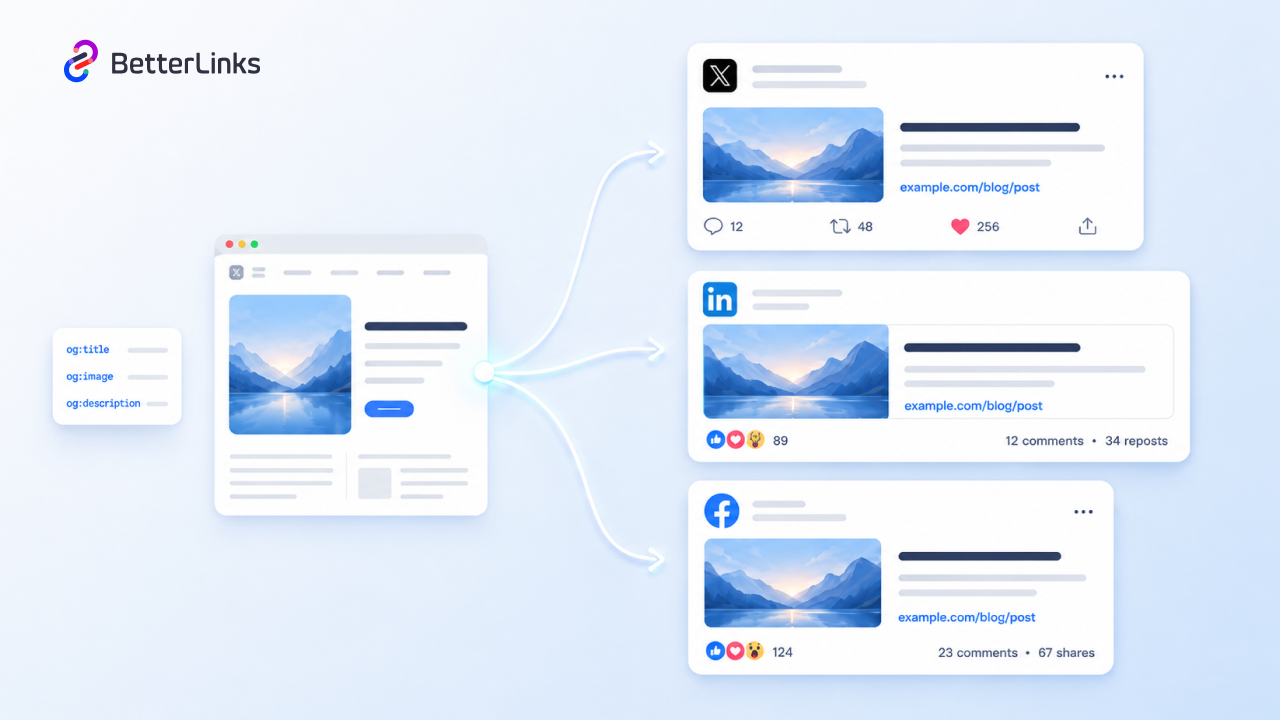
Implementing a robust server-side Open Graph strategy guarantees that your content entities are visually optimized for human audiences and properly tokenized for modern AI crawlers.
In this guide, we outline the exact server-side protocols required to deploy core metadata properties, optimize image specifications and execute strict validation workflows to secure your distribution pipeline.
TL;DR
Open Graph tags are special meta tags that control how your website content appears when shared on social media platforms like Facebook, LinkedIn and X.
New to Open Graph tags? Check out this quick glossary to understand the key terms and concepts behind social sharing previews 👉🏻
| Technical Focus | Best Practice Execution | Expected SEO/AEO Outcome |
| Core Meta Tags | Implement og:title, og:type, og:image and og:url on all indexable nodes. | Establishes a baseline entity graph for social crawlers and LLMs. |
| Image Specifications | Maintain a strict 1200×630 pixel resolution (1.91:1 aspect ratio) under 8MB. | Prevents automatic image cropping and rendering errors on high-DPI displays. |
| Server-Side Rendering | Inject metadata directly into the raw HTML before client execution. | Ensures immediate parsing by lightweight search bots without JS delays. |
| Validation Workflow | Force cache recrawls using platform-specific debugging tools. | Resolves outdated cached previews and instantly reflects new server data. |
The Anatomy of Open Graph Tags & Impact on Search Entities
Open Graph tags refer to how social media platforms and AI engines construct visual previews of your web pages. As a core component of modern metadata standard architecture, Open Graph functions by mapping specific content properties directly to the HTML document. This standardization prevents algorithmic guesswork and ensures precise visual delivery.
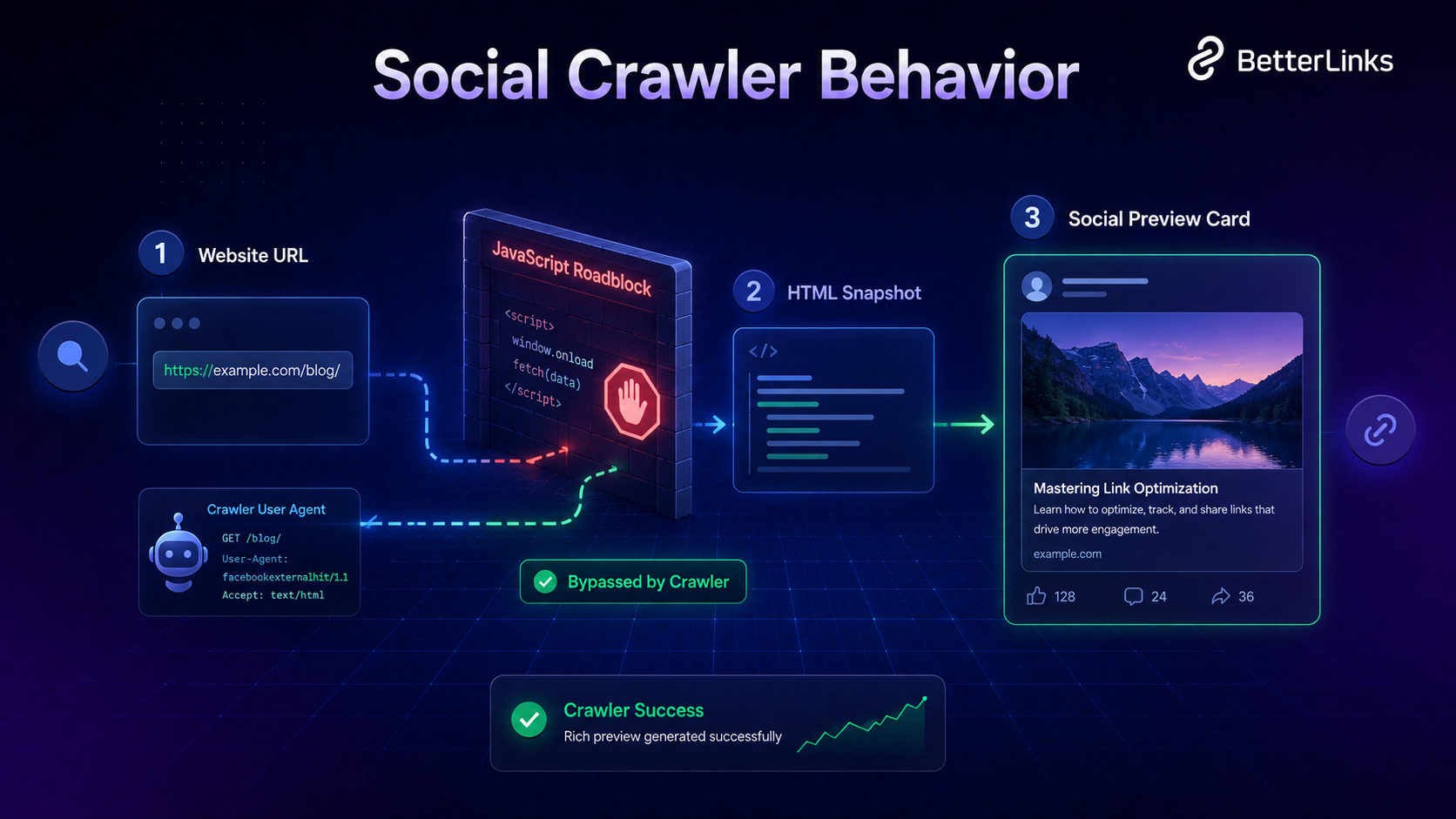
This precise standardization allows social networks and AI systems to render visually engaging preview cards that directly influence user behavior. Technical audits utilizing tools like Screaming Frog or Lumar routinely expose these metadata gaps across enterprise entity graphs. Identifying and resolving these missing tags ensures absolute control over your content distribution framework.
How DOM Parsing Dictates Social Crawler Behavior
- HTTP GET Requests: Social platforms send lightweight scraper bots to fetch the raw DOM payload without loading heavy visual assets.
- Header Scanning: The crawler immediately targets the
<head>section seeking explicitly declared metadata properties for extraction. - Fallback Scraping Protocols: Without explicit tags the bot resorts to chaotic scraping and pulls random navigation strings or cookie policies instead of article text.
- Server-Side Dominance: Establishing strict node definitions within the server response eliminates crawler ambiguity entirely.
The JavaScript Rendering Bottleneck for Metadata
- Client-Side Rendering (CSR): Frameworks like React or Angular serve empty root
<div>containers that social crawlers abandon to save compute resources. - Crawl Budget Constraints: Automated scrapers rarely execute heavy JavaScript bundles meaning unrendered payloads result in broken preview cards.
- Server-Side Rendering (SSR): Next.js or Nuxt architectures pre-render tags on the server to guarantee immediate parsing upon request.
- Dynamic Rendering Solutions: Services like prerender.io intercept crawler user-agents to serve static HTML snapshots for legacy applications.
The Core Open Graph Meta Tags You Must Implement
The Open Graph specification requires four absolute properties to validate a URL as a distinct graph object. As a core component of the global social graph protocol, the system functions by requiring the title, type, image and URL tags on every indexable node to prevent broken entity relationships.
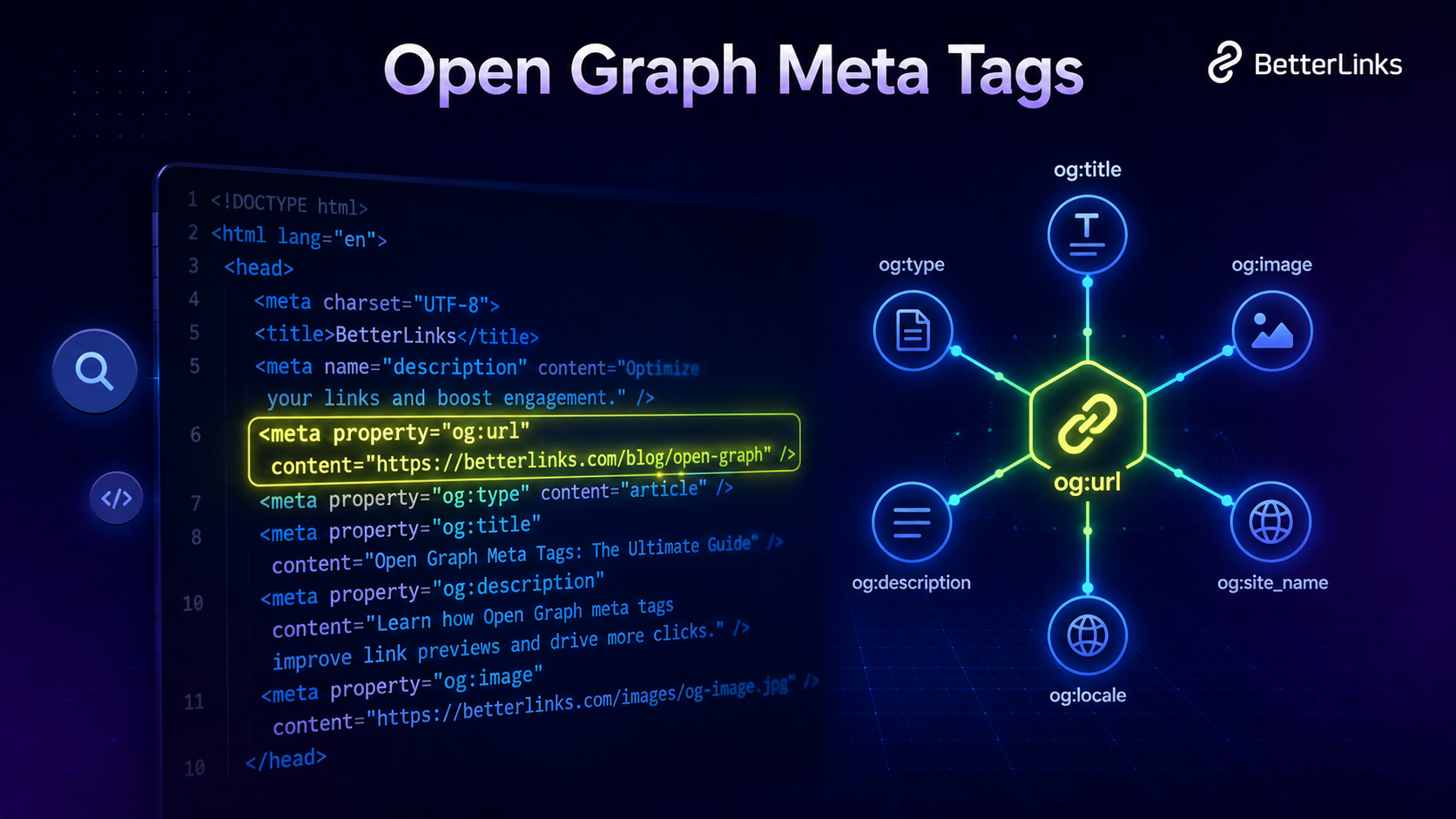
Implementing a flawless Open Graph architecture requires strict adherence to protocol standards. You must treat every URL as a distinct node requiring its own highly specific database mapping.
Injecting identical sitewide metadata across every page causes massive semantic confusion for crawlers. Adhering to strict anatomy prevents parser errors and guarantees your link equity translates into measurable referral traffic.
Defining the og:title And og:description Properties
- Character Limits: Restrict titles to 60 characters and descriptions to 90 characters to prevent unwanted truncation across mobile viewports.
- Brand Name Redundancy: Omit your brand name from the title string because platforms already display your root domain name separately.
- Semantic Expansion: Use the description field to introduce compelling statistics or controversial statements rather than duplicating the title text.
- String Sanitization: Strip unescaped HTML entities and double quotes programmatically to prevent syntax-breaking parser errors.
Establishing Node Types with og:type
- Entity Classification: Categorization dictates the specific visual template and rich features applied by platforms.
- Generic Misfires: Do not use the default website type for deep editorial content or product category pages.
- Article Parameters: Deploying the article type unlocks crucial secondary timestamps like published time and author verification data.
- eCommerce Schemas: The product type pulls live currency codes and inventory status directly into the preview card layout.
Canonicalization via the og:url Tag
- Metric Consolidation: This tag dictates the permanent social location of your entity across the web graph.
- UTM Parameter Sprawl: Sharing campaign links fragments your engagement metrics across dozens of duplicate tracking URLs.
- Clean Root Mapping: Programmatically inject the absolute canonical URL to force platforms to attribute all likes and shares to the primary node.
- Redirect Chains: Ensure this URL returns a 200 OK status because 301 redirects cause crawlers to abandon the scrape entirely.
Optimizing the Open Graph Image Size for Cross-Platform Success
Formatting the image property requires strict adherence to resolution and aspect ratio guidelines. As a core component of visual distribution architecture, the image tag functions by serving high-resolution assets to platform crawlers. Using precise dimensions ensures flawless rendering across all mobile and desktop social feeds without automated distortion.
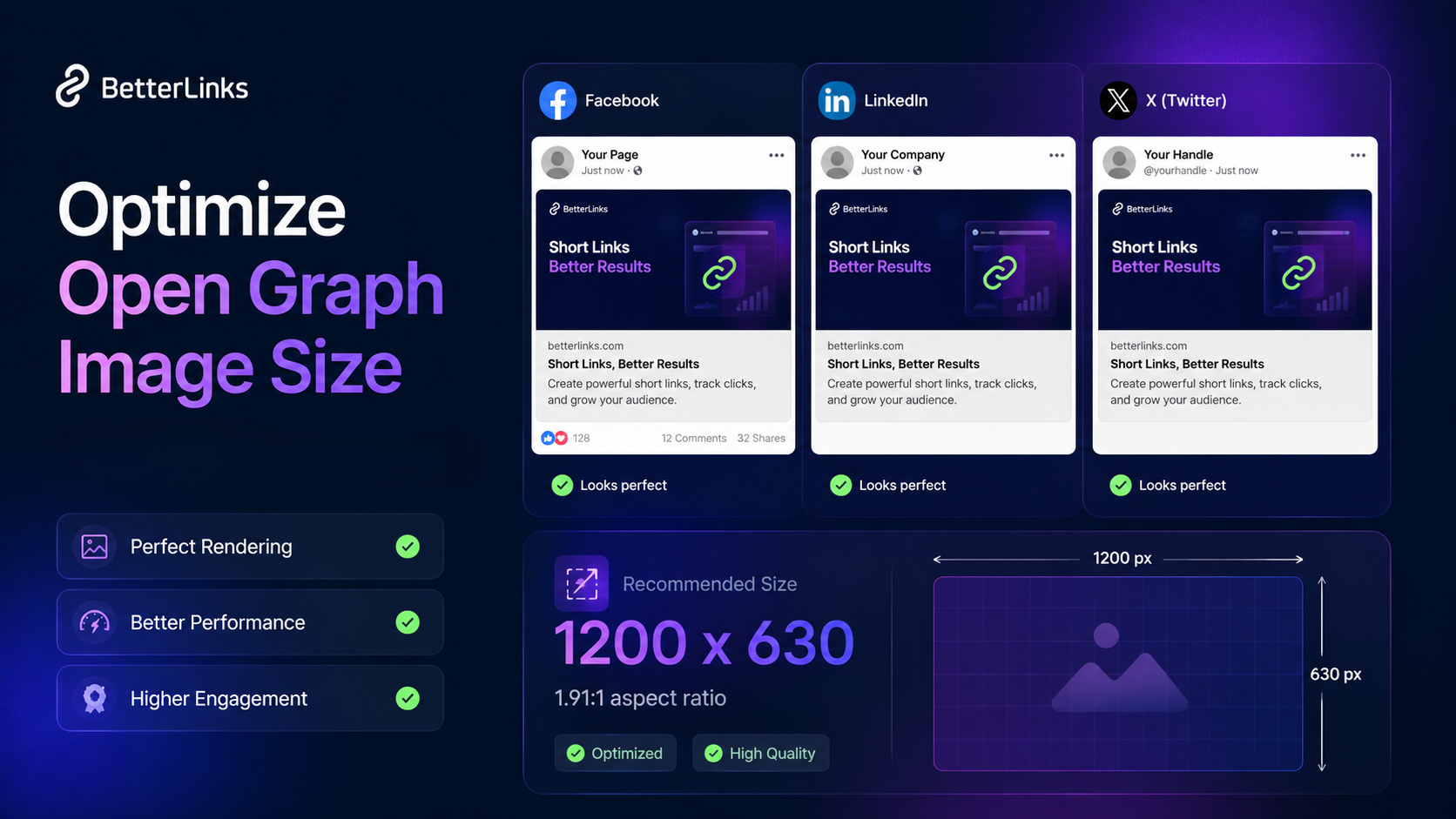
Visuals dominate user attention spans across all social application interfaces. If a crawler cannot locate a valid visual asset, it generates a text-only card that dramatically reduces your visibility.
Providing a technically flawless asset guarantees maximum screen real estate utilization on mobile screens. You must adhere to strict file size limits and modern compression algorithms to protect core server performance metrics.
Server-Side Image Compression And CDN Delivery
- Oversized Payloads: Uploading uncompressed 4MB graphics triggers crawler timeout errors, resulting in a blank gray preview box.
- Platform Thresholds: Ensure every asset remains strictly under the universal 8MB maximum weight limit dictated by Facebook and X.
- WebP Conversion: Dynamically compress sharing assets into next-generation formats to accelerate automated bot traversal.
- Edge Network Distribution: Route all image requests through a global Content Delivery Network to prevent origin server CPU spiking during viral traffic surges.
Aspect Ratio Mathematics for High-DPI Displays
- Industry Standard Geometry: Maintain a strict 1.91:1 aspect ratio utilizing exactly 1200×630 pixel dimensions.
- Algorithmic Cropping: Uploading square or vertical portraits forces platforms to aggressively center-crop the asset destroying vital text overlays.
- Retina Display Compliance: Dense pixel resolutions prevent mobile browsers from artificially stretching assets and causing severe pixel artifacting.
- Programmatic Edge Generation: Utilize serverless functions like Vercel OG to compile HTML templates into perfectly scaled PNG files dynamically.
How to Add Open Graph Tags in WordPress Ecosystems
WordPress does not natively generate comprehensive social metadata out of the box. As a core component of CMS technical SEO Open Graph implementation functions by utilizing custom PHP hooks or dedicated database plugins to map content to specific HTML headers. This establishes a reliable automated server-side metadata pipeline.
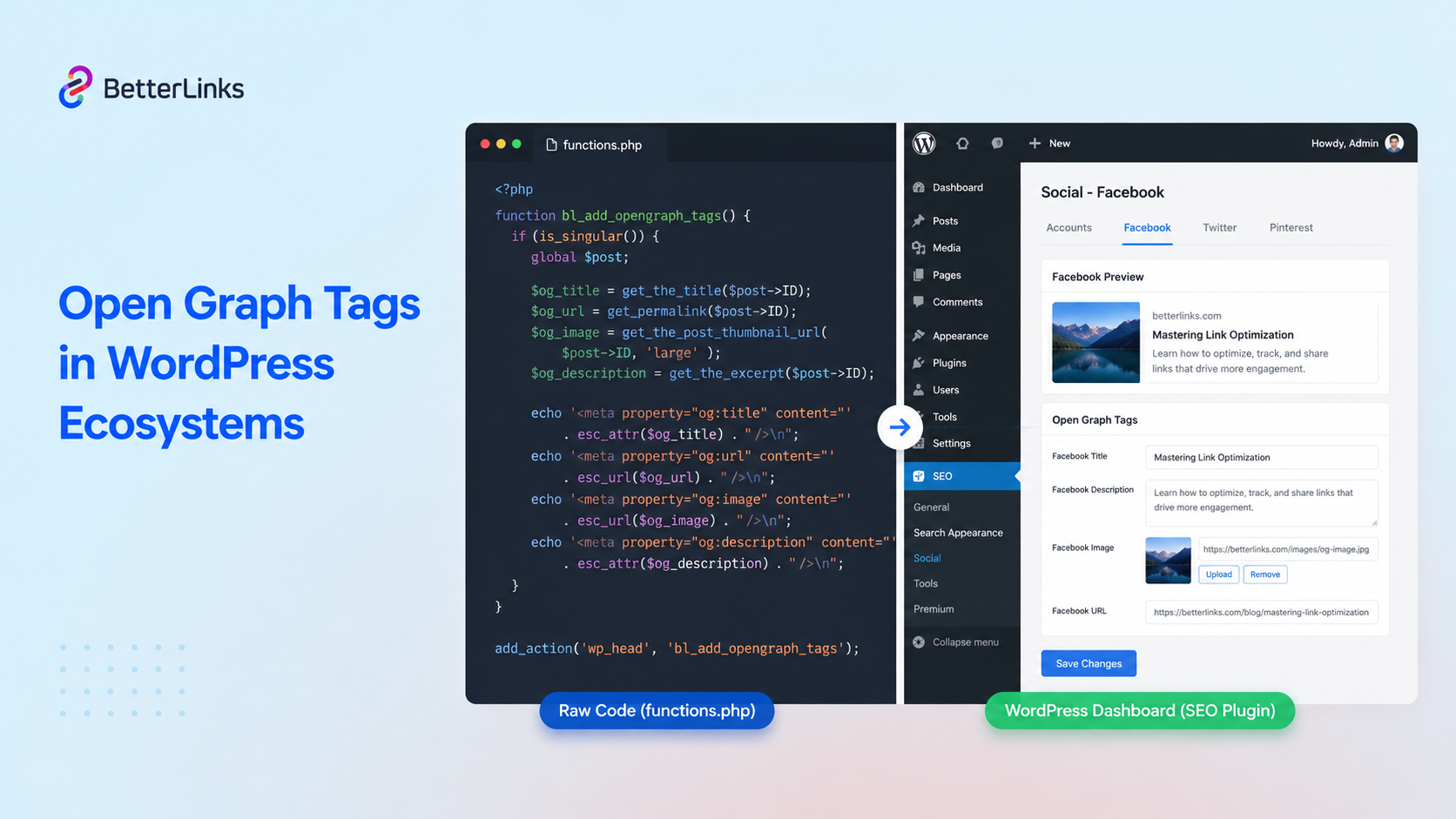
Executing technical SEO within the WordPress environment requires managing automated database output and preventing dangerous plugin conflicts. Because the core software lacks native generation, you must build a robust pipeline manually.
You must choose between lightweight code injection via theme files or scalable mapping via dedicated SEO applications. Both methods prioritize server-side rendering to satisfy fast-moving search bots.
Manual functions.php Implementation Protocols
- Absolute Control: Writing custom PHP bypasses bloated third-party software and minimizes external database queries.
- The
wp_headHook: Intercept the page rendering process immediately before the closing document tag to echo meta properties programmatically. - Fallback Logic: Build conditional statements to inject a sitewide default graphic if an author forgets to upload a featured image.
- Production Edits: Never edit core files on a live server because a single syntax error triggers fatal downtime.
Utilizing Dedicated SEO Plugins
- Scalable Architecture: Enterprise deployments managing thousands of dynamic URLs require automated mapping tools like RankMath.
- AI-First Alternative: ThinkRank sets Open Graph and X (Twitter) cards for every post from its Social tab, right next to your SEO title and meta description.
- Distinct Messaging: Override default settings to create custom social headlines completely separate from standard organic search titles.
- Redundant Output: Avoid installing multiple sharing plugins simultaneously to prevent the injection of duplicate conflicting tags.
- Source Code Audits: Inspect the raw DOM to verify only one definitive database system governs your HTML header pipeline.
Advanced Open Graph Setup for AI Summaries & Web Crawlers
Modern AI engines rely heavily on structured metadata to synthesize contextual summaries rapidly. As a core component of Retrieval-Augmented Generation, advanced tag setup functions by feeding LLMs highly dense and easily parsed tokens. Optimizing your tags accelerates data extraction and secures brand visibility within modern search features.
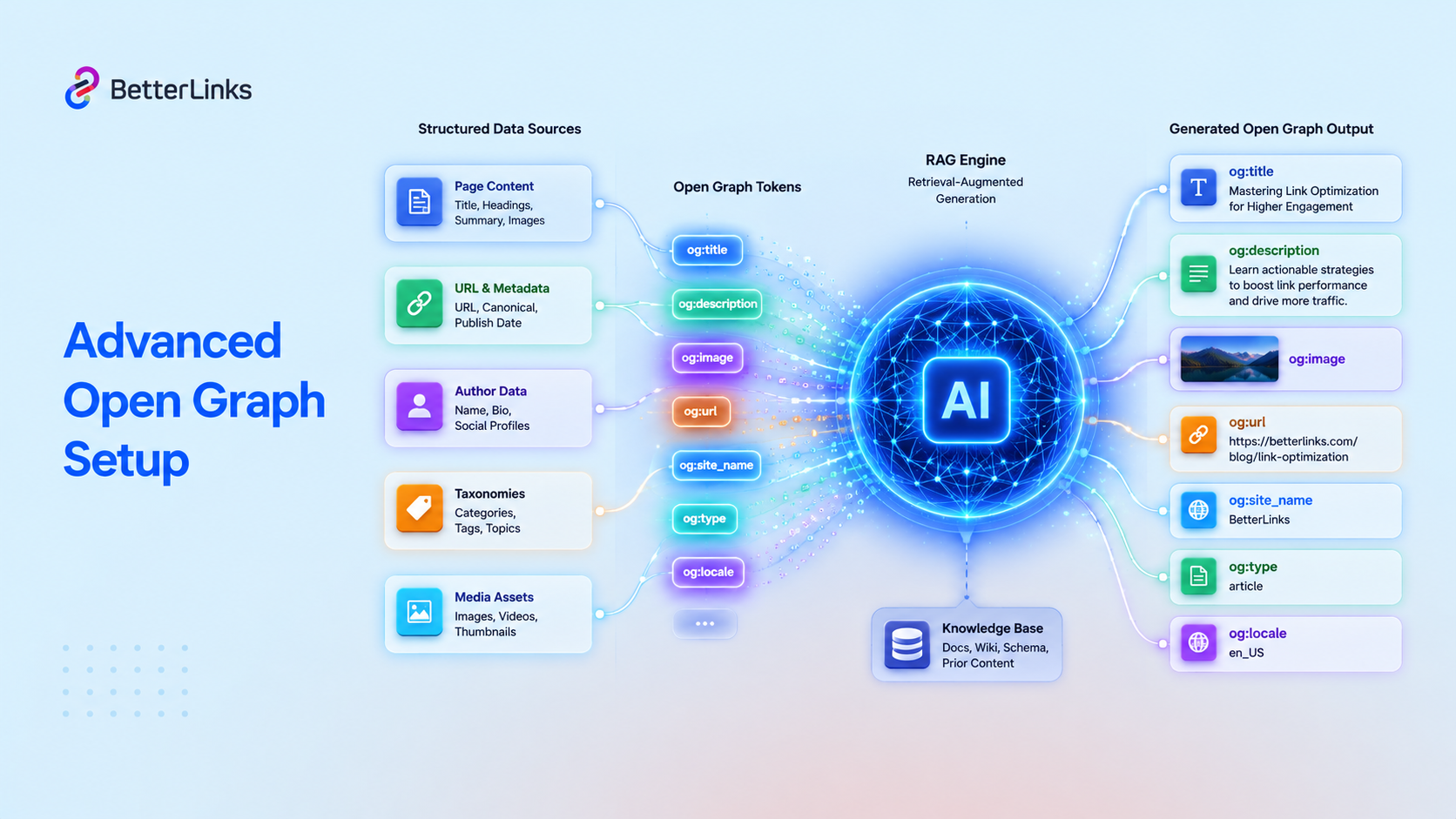
The paradigm of content distribution continues shifting fundamentally toward generative summarization engines. Platforms like Perplexity and ChatGPT prioritize structured metadata over unstructured body text to save massive amounts of computational processing power.
Ensuring your architecture is semantically dense positions your entities perfectly for this traversal methodology. Aligning your meta properties establishes undeniable factual authority for these intelligent systems.
Structuring Data for RAG Systems
- Token Prioritization: Specialized crawlers like ChatGPT-User scan the
<head>properties first to determine contextual relevance. - Vector Embeddings: Your title and description strings serve as primary semantic anchors guiding AI synthesis algorithms.
- Marketing Jargon: LLMs discard vague or keyword-stuffed strings in favor of declarative factual statements.
- Schema Parity: Ensure your Open Graph properties align perfectly with your JSON-LD script tags to establish verifiable data continuity.
Dynamic Metadata Generation for Enterprise Graphs
- Programmatic Synthesis: Deploy edge computing to query live databases and construct unique HTML payloads instantly.
- Real-Time Variables: Inject live product pricing and breaking news timestamps directly into preview cards without human intervention.
- Dynamic Visuals: Utilize Cloudinary or specialized edge functions to assemble unique PNG graphic assets on the fly.
- Compute Exhaustion: Implement aggressive CDN cache layers for these dynamically generated assets to protect the origin server bandwidth.
Testing & Debugging Your Social Media Meta Tags
Validating your server implementation requires bypassing consumer-level platform caching infrastructure. As a core component of technical quality assurance, metadata debugging functions by forcing social networks to execute a fresh HTTP request. Utilizing official platform engineering tools isolates injection failures and confirms successful tag resolution immediately.
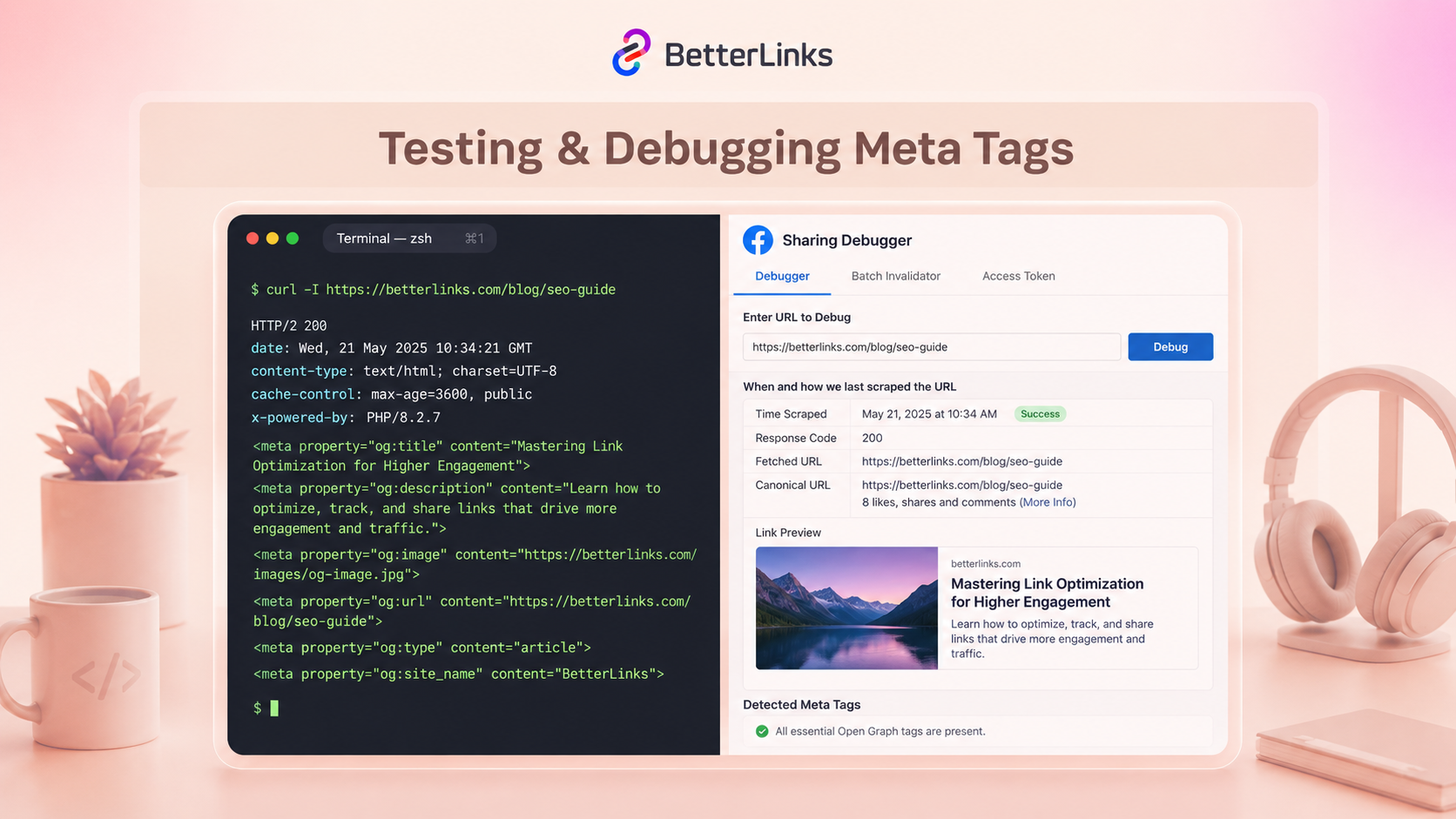
Assuming your code functions perfectly without secondary validation remains a critical failure point in technical SEO. The global CDN architecture utilized by social networks is aggressively persistent and routinely serves outdated payloads.
You must execute a predictable workflow to diagnose HTML bottlenecks and implement the solution. Explicitly forcing a server recrawl verifies the outcome before you launch campaign links.
Diagnostic Workflows Using Platform Debuggers
- Live Feed Testing: Blindly pasting links into a social timeline fails to expose raw crawler extraction data.
- Engineering Tools: Utilize the Facebook Sharing Debugger or LinkedIn Post Inspector to mimic exact bot traversal behaviors.
- Granular Logging: These tools output exact raw strings parsed from the DOM highlighting pixel dimension errors and missing tags.
- Terminal Verification: Utilize cURL command line requests to verify your origin server output before blaming platform parsing algorithms.
Forcing Cache Clear Protocols
- Cache Latency: Social platforms permanently store initial HTML payloads preventing newly updated graphics from appearing automatically.
- Manual Invalidation: Clicking the scrape button within a debugger tool sends a forceful override command to platform servers.
- Dummy Parameters: For X developers must append a unique tracking variable to the URL string to force a completely fresh traversal.
- Editorial Workflows: Require your content team to run updated URLs through these diagnostic interfaces immediately after publishing modifications.
Common Deployment Errors & Crawler Mechanics
The technical nuances of social scraping protocols confuse many development teams attempting to scale content distribution. Resolving broken previews requires understanding how automated bots parse server responses compared to standard browsers.

We categorized the most common configuration errors surrounding platform latency and entity mapping. Reviewing these resolutions allows technical marketers to diagnose specific domain errors rapidly:
❌ Missing Images: Severe cache latency requires forcing a manual recrawl using platform debuggers to pull the updated graphical asset.
❌ Google Ranking Impact: While not a direct ranking signal, optimized tags increase CTR, driving vital indirect engagement metrics.
❌ Twitter Card Parity: Modern X crawlers utilize Open Graph variables as a definitive baseline fallback if proprietary Twitter tags are missing.
❌ Missing Canonical Tags: Omitting the og:url property fractures your engagement metrics across parameterized campaign links resulting in artificially low share counts.
❌ AI Crawler Access: Allow specific user-agents like ChatGPT-User in your robots.txt to ensure LLMs can extract your structured metadata parameters.
Customize Social Link Previews in WordPress
For WordPress users, managing Open Graph metadata manually can be time-consuming and technical. This is where BetterLinks provides a practical solution.
BetterLinks includes a Customize Link Preview feature that allows you to define how each shortened or branded link will appear on social media. Instead of editing code or inserting meta tags manually, you can directly set the preview elements from a simple interface.
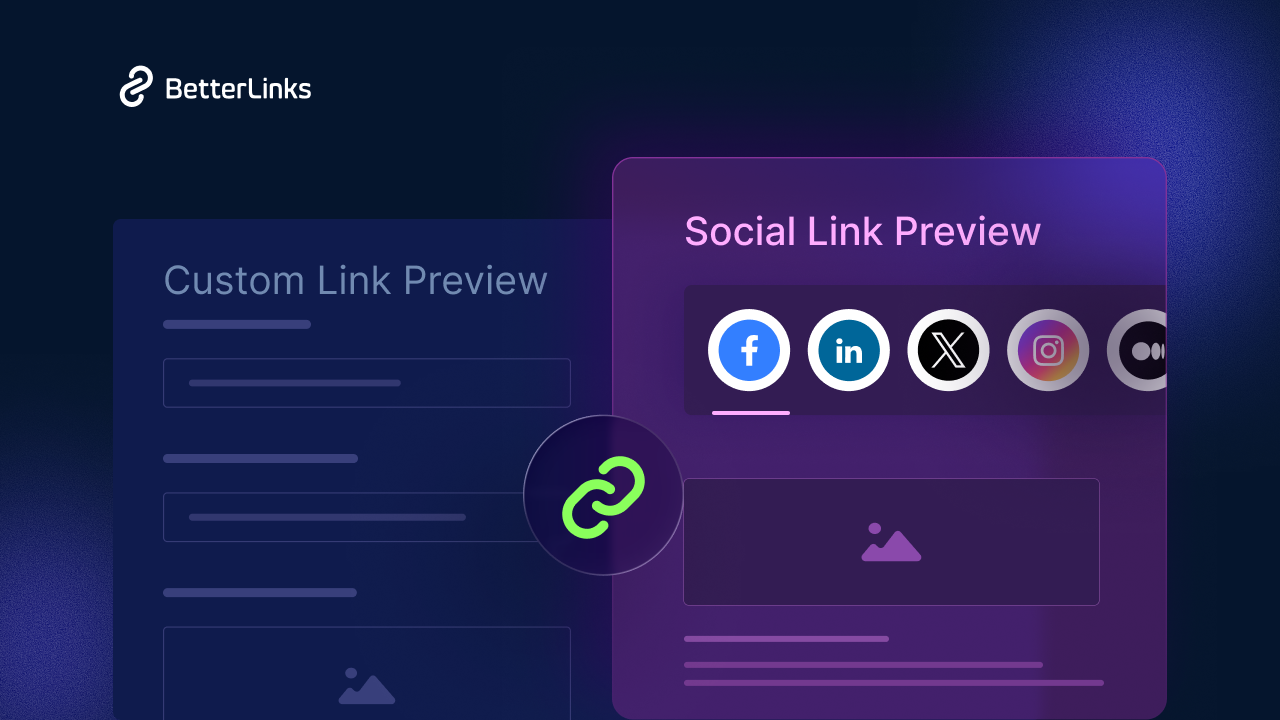
With this feature, you can customize:
- The preview title that appears on social platforms
- The description shown under the link
- The preview image that represents your content
These settings directly align with core Open Graph properties like og:title, og:description and og:image. When someone shares your BetterLinks URL, social platforms automatically read this metadata and generate a clean, structured preview.
Check out the following documentation to learn how to customize link previews and properly optimize Open Graph tags in WordPress using BetterLinks.
In simple terms, BetterLinks acts as a user-friendly layer on top of Open Graph implementation. It helps you manage social preview data visually, ensuring every shared link looks professional, engaging and optimized for higher click-through rates.
Make Your Website More Share-Friendly
Ignoring proper server-side metadata can hurt your social visibility, user engagement and brand image. Social platforms and AI tools rely on structured metadata to understand and display your content correctly.
By optimizing your titles, images and Open Graph tags, you can control how your links appear across platforms. Regularly test and validate your metadata to fix preview issues and improve your content visibility online.
Is your URL architecture holding you back? Join our Facebook community to stay updated on advanced technical SEO strategies or subscribe to our blog for deep-dive WordPress solutions.
Most Common FAQs About Open Graph Tags
Below are some of the most common FAQs gathered from SEO communities, Reddit discussions, Quora threads and technical forums to help you better understand Open Graph optimization in 2026:
1. Do Open Graph Tags help SEO?
2. Which Open Graph Tags are required?
- og:title
- og:description
- og:image
- og:url
3. What is the recommended Open Graph image size?
4. How do I test Open Graph Tags?
– Facebook Sharing Debugger
– LinkedIn Post Inspector
– Twitter Card Validator
– Open Graph Preview Tools
5. Do I need unique Open Graph Tags for every page?
6. Can I add Open Graph Tags without a plugin in WordPress?
<head> section of your theme or use SEO plugins like Yoast SEO, Rank Math or AIOSEO for easier management.